Gluten Free Waffle Tales

This post contains Amazon affiliate links. If you click through and make a purchase, I will receive a small compensation at no extra cost to you. This helps keep my blog ad-free.

Since I went gluten free eleven years ago, I’d never tasted a homemade waffle. I made regular waffles for my kids when they were at home and purchased frozen waffles for myself whenever I had a hankering for some. Until 2024! As soon as the new year was born I began to think about waffles. Alan had an old waffle maker from before my time, so I dug it out, cleaned it up, and mixed up some gluten free batter.

Complete fail! The waffle maker must’ve lost its nonstick coating because the first waffle stuck to the surface even after I’d oiled it. So I dug it all out (with a plastic utensil) and started over. This time the waffle maker stuck together like glue. No manner of pulling could pry it apart. So that one went into the landfill and I made the rest of my batter into an unsatisfactory pancake. I was so sad because I’d felt so virtuous cleaning up the waffle maker and putting something old to use again. Unfortunately, it wasn’t old old, it was just early 2000’s old which means it was built for obsolescence.

Then I fumed, hemmed, and hawed for a couple of days, wondering what the best solution was and still craved waffles. I decided to purchase this Cuisinart waffle maker because the design was simple, it had lots of good reviews, and the price was right. I didn’t want bells and whistles; I just wanted it to make good waffles.

The day after it came, I read all the instructions, wiped it down with soap and water, brushed oil on it and plugged it in. I whipped up a new batch of batter in the blender this time, (I will always mix GF waffle batter in the blender from now on), poured in my first half cup of batter and closed the top. Success!!! It didn’t stick, the batter didn’t pour out the sides (the bane of waffle making!), and the waffle tasted delicious.

I made the whole batch, cooled the ones I didn’t eat on a baking rack, and then froze them in a single layer on a baking sheet in the freezer. Once frozen, I popped them into a zip-top bag and put them back in the freezer. Because the size of the waffle is too big to reheat in the toaster, I put it in the toaster oven to defrost. (I tried breaking one up into fourths and defrosting half at a time in my little two-slot toaster but by the time the second half was ready, the first was cold.)

After eating eggs and toast for years, I’ve been switching it up with eggs and a waffle. I’m sure I’ll tire of them after a while, but right now they’re really making my mornings happy. Since I’m not drinking coffee right now, mornings have been a bit hard to face, to be honest. I LOVE coffee, even the decaf I’ve been drinking after I turned forty. But I was having so many health problems and after reading that coffee is a significant source of mold, I decided to cut it out of my diet, along with some other things, at least for now. Every morning it’s a battle as I remind myself of all the ways my health seems to be improving after only ten days but it’s still difficult not to give in. I keep looking at the calendar asking, “Hasn’t it been at least a month yet?”

Back to the waffle story…

If you’re interested in making these waffles, here is the recipe from the Mama Knows Gluten Free blog.

A couple of tips:

I don’t recommend using cooking spray on your non-stick waffle maker surface. Use oil and a silicone brush. Olive oil, sunflower oil, refined coconut oil–any of those oils are great. Cooking spray has other stuff added besides just oil and it will gum up your waffle maker. In fact, I don’t recommend cooking spray on anything and haven’t used it in about fifteen years. A silicone brush or a paper towel and some oil work just fine.

I used my own gluten free flour blend to make the waffles. I mix up a good amount of flour all at once so I have it for several weeks at a time. (Here’s my gluten free flour recipe: 4 cups brown rice flour, 2 cups sorghum flour, 2 cups tapioca flour/starch, 1 cup arrowroot powder/starch/flour, 5 teaspoons xanthan gum. Mix really well and store in an airtight container.)

If you use the gluten free waffle recipe above, put your waffle ingredients in a blender if you have one. You can blend in a stand or hand mixer, but there will likely be lumps. Just put in the liquid ingredients first and then the dry ingredients and blend, scraping down the sides with a spatula a couple of times. Then transfer to a bowl while you make the waffles.

And if you spring for this Cuisinart waffle maker I just purchased, only use a half cup of batter at a time. Pour it into the middle and spread with a spatula, close the top and let it do its thing. Just once I put in a little more than half a cup and the batter oozed out all around which is what used to happen when I made regular waffles years ago in a two dollar garage sale waffle maker for my kids. And that’s what made made me think I hated waffle making. So whatever instructions come with your waffle maker, read them and find out how much batter exactly to pour in. It will make for a very pleasant experience and you likely will make waffles much more often.

Let me know if you make gluten free waffles (these or others) and share your tips!

What is the Kindest Thing?

What does being kind bring up for you? Is it paying for the meal or coffee or toll of the person behind you? Is it a hug or refraining from saying something sharp or critical to your friend or family member? Is it words of encouragement? Or making a delicious meal for someone who’s having a hard time?

Those examples are the easy side of being kind. There’s a tougher side to kindness as well.

Being kind can be releasing someone who needs you to let them move into the next chapter of their life. It can be ending work at a place of employment because it’s taking too high of an emotional toll. It can be encouraging yourself to go for a walk when you’re stressed or to eat a nutrition-packed lunch instead of fast food so you’ll feel great the rest of the day. It can be saying something that needs to be said, even though you don’t know how it’ll turn out.

One example of the difficult side of kindness from my own life is helping my 24-year-old son pack and get ready to move out West. My mother heart wants him to stay in this area, close to me, so I can see him, spend time with him, feed him, etc. But that wouldn’t be kindness if I pressured him to stay or to heaped guilt on him for deciding to go. It’s natural and healthy for young adults to leave the nest, to spread their wings, and fly off on adventures of their very own. I did my work of raising him, and now it’s time for him to fly.

Similarly, I didn’t hold my daughter back when she left a year and a half ago at age 18. The kind thing was to help her gather together and pack all the household things she’d need for life on her own. To hug her and say how proud I was of her for being so brave to go after her dreams. And I was there to wave her off down the road. After she left, I had two weeks where I was so exhausted I could hardly leave my bed. When I went to the grocery store or anywhere in our small college town, it felt empty. I was bereft and grieving. And it was ok. I slowly adjusted to it and eventually it became less painful. Still hard, but less intensely so.

I think I will have a period of grieving after my son goes as well, and that’s ok. As we know, the only constant in life is change. Everything is always and ever changing. And back to kindness, I will do the soft, gentle kind things for myself. And I will also encourage myself not to wallow in sadness, but to be grateful for all the years I had with both of my kids and for what beautiful young people they are. I will encourage myself to still practice meditation and yoga, to still move my body, to still eat the carrot salad, the kale, the right amount of protein for me. To dance, sing, laugh, and create. To drink tea and wine, tend my garden, to read and write and celebrate life in all its complex, bittersweet, glorious moments. I will be kind to myself.

What is kindness looking like to you today?

Friday Favorites (2/24/23)

Here are a few of my favorite sources of inspiration and learning from the past week or so. Enjoy!

Podcasts: As I mentioned in my last post, I’ve been listening to Brendon Burchard’s Motivation podcast. It has helped pull me out of the doldrums and rekindle my vision for my business, my relationships, and my every day life. He’s a bit “Energizer Bunny”, which you might expect from a motivational speaker. I highly respect him though because he’s built six multi-million dollar companies with the personal growth, mindset, and business acumen that he shares on both his Motivation and Marketing Podcasts.

If you’re a business owner or simply trying to uplevel in any area of your life, give Brendon’s podcasts a try! Yes, you’ll definitely pick up on that masculine energy, although he preaches rest, relaxation, and refueling as well as focus, scheduling, and simple hard work.

Books: This week I read The Vibrant Years by Sonali Dev and was absorbed into the story from page one. It unfolds the story of Bindu, a sixty-something grandmother, as well as her forty-something daughter-in-law and granddaughter Cullie. These three women, at different times in their lives, are discovering who they are at their various ages, healing from past hurts, falling in love, and certainly not living by societal standards. It’s exciting, heartwarming, and all I’ll say is it ends on a positive note. I need this kind of book in my life.

I’m reading The Joy and Light Bus Company from Alexander McCall Smith. If you’ve never tried The Number 1 Ladies’ Detective Agency Series, I recommend them so highly! I’ve been reading and re-reading these (on Audible only) for years. I love the slow pace, the characters that return in each book, the soft and witty humor, the conundrums and mysteries they work through and solve, the accents, the bush tea drinking. This is Book 22 and the next one in the series is in my Audible queue waiting to be read. They are delightful.

Essential oil blend: I am blowing my own trumpet here. Recently I filled some new bottles of my Winter Wellness Diffuser Blend, and said, “This blend smells so good!” And it’s very helpful for supporting respiratory health, decongesting stuffy noses, as a cough suppressant, and to boost immune strength. I’ve been using it in my bedroom diffuser at night to help keep my nose clear. It works!

That’s all for this week, friends! I hope you check some of these favorites out and let me know if you do. (For the full list including poetry, exercise, music, and more books, join my Patreon at the Literary Society Tier or higher.)

Be well,

Kim

Comfort Yourself: It May Look Different Than You Think!

How are you feeling? If you’re in need of some comfort, nurturing, and uplifting, you’re not alone! I’ve been hearing this a lot lately. Maybe the winter has you down; perhaps you’re grieving the loss of any number of people and circumstances; and maybe you’re still processing “the lost years”, or still feel stuck in them due to worries about catching Covid.

 If you nodded your head to one or more of the above, I’m sending you a virtual hug. And I want to encourage you to comfort yourself. By this I mean to care for yourself in all the ways you need attention in body, mind, and soul. Good nutrition, exercise, prayer or meditation, enough sleep and rest, play/creativity, water, supplements, a bunch of flowers, a walk in the woods or around the block, connecting with your friends and loved ones, therapy, etc., are all ways to comfort yourself.

It’s easy, when we’re feeling down, to let all that go and just wallow, eat junk, drink too much, isolate, binge watch or obsessively scroll. We think we are comforting ourselves when we check out and self-medicate in some way.

Did you know that’s actually not comfort? Comfort means “to strengthen greatly”. And no strengthening is happening when we treat ourselves poorly–we’re weakening and abusing ourselves greatly instead. This actually makes us more fragile and less able to handle what is difficult in our lives.

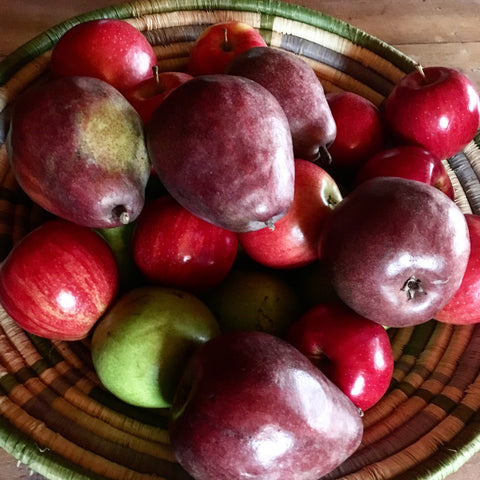
Bowl of pears and apples

We need to do what is life-giving for us. To love ourselves enough to prioritize our physical, emotional, mental, and spiritual health. I have to bring up the golden rule because sometimes people get tetchy about loving themselves, especially those with Christian roots or identities. Loving and serving others they can handle, but when they’re encouraged to love themselves it sounds self-centered. Um, it’s in the Bible, ya’ll. The second of the Ten Commandments. “Love your neighbor as…yourself!” There’s an assumption in that commandment that you love yourself before you go love your neighbor. 

So back to comfort. Ask yourself: In what ways am I in need of comfort (aka to be strengthened greatly)? How could I bring comfort into my life today in practical ways? What tools do I already have to strengthen myself? Where might I need help or accountability in order to care for/comfort myself?

Personal story: I am still dealing with the effects of Covid from six months ago. My brain is foggy sometimes, I tire out easily and get this trembly weakness in my legs and have to sit down. Sometimes I have to rest for a couple days in a row. Because of this, I hadn’t worked out as hard or as often as I’m used to. I’d work out one day and take three off–this was unheard of for me! I’ve been working out every day since I was twelve. I felt so bummed about how out of shape I had become, how weak I felt, how I’d lost stability in my core and mobility particularly in my hips. I kept waiting for things to get better. But they weren’t.

Snowy sunset

Then I listened to motivational speaker Brendon Burchard talk about making a Don’t Wait list and beginning to do the things I truly desired to do. And one of these things for me was getting in shape and feeling good in my body again. So I signed up for a challenging 4-week exercise program.

The first week was really difficult and I felt a bit discouraged because it was harder than I thought it would be. My brain tried to tell me it’s too hard, maybe I should quit, etc., but I stuck with it ( and kept listening to Brendon Burchard’s Motivation podcast for encouragement).

I’m nearing Week 4 and can feel my body getting stronger and firmer, my mobility range is growing, and I’m setting my sights on a 100 Day Program that I didn’t think I’d ever do again. And my confidence is higher because I’m keeping my word to myself and doing what I know is good for me to do.

This is an example of me comforting myself! It’s the opposite of what we might think of as comfort, right? Oh, and by the way, I didn’t overdo it, injure myself, or punish myself with exercise. This is a balanced program and includes rest days. I’m feeling better, so this is the right thing for me. 

Kim in workout clothes

I’m not suggesting you sign up for a challenging exercise program. Comfort could look like many different things, depending on what you need. Sometimes a cup of tea, a nap, a book or Netflix, and a blanket is the comfort we need. My point is, if you’re feeling down, or are in a difficult season, take a look at your daily routines/habits and see how you might care for yourself. Being good to yourself will help you feel as good as you possibly can during whatever you’re going through. I hope you find the comfort you need!

Consistency Most of All (Vata Season, Part 2, Daily Habits + Rituals)

One of the main principles of Ayurveda is that like increases like and opposites balance. If you have an excess of Vata (air + space) in your body, mind, and emotions, then you’re likely moving from activity to activity, not finishing things, are all over the place with your thoughts, and you’re having a hard time sticking to a daily health & wellness routine. You may experience sleeplessness, heightened anxiety, and irregular hunger, eating, and digestion issues such as bloating, gas, and constipation. So what would be helpful is not more of the same.

To balance all that mobility and flighty thinking/eating/doing, we need to bring in some earth qualities, which can be found in Kapha dosha. Basically, we need to slow down, tether our mind, body, and emotions with consistent practices (as well as the grounding, nourishing foods I mentioned in last week’s post). We need the heavy, dense, slow, constant qualities of earth to soothe and stabilize our overwrought nervous systems.

There’s actually quite a growing number of Ayurvedic teachers who feel our modern way of life has put nearly everyone in Vata excess. In that case, most of us would benefit from these habits any time of year.

So what does Ayurveda recommend specifically? Here are three helpful habits to begin balancing Vata.

Set a routine: Wake with the sun, eat, and sleep at the same times every day. It might seem boring, especially if you’re a person with a Vata-dominant constitution or are experiencing high Vata. It might seem exciting and preferable to do whatever you want, whenever you want. That only contributes to the imbalance. As much as is possible, get yourself on a schedule and do your best to stick to it.

Morning practices: Meditate, pray, walk, or do gentle and nourishing physical practices like yoga or Qigong during early morning hours. Resist the urge to open up your email, jump on your phone and start scrolling. Set aside the first hour or two of waking up for you to receive and enjoy spiritual and/or mental nourishment, and warm your muscles and joints with a gentle physical practice. This will give you a sense of calm and ease that will stay with you the rest of the day.

Do oil self-massage, or abhyanga, every day either before or after showering. Here’s a short how-to video on abhyanga by Kate O’Donnell. If you have dry skin, you can use a warming oil such as sesame oil ( I prefer refined sesame oil), or if you have sensitive skin, you can use almond, olive, sunflower, or coconut oil, as long as you don’t have allergies. Coconut oil is a cooling oil, so it is preferred for hot weather or those with mostly Pitta constitutions. If you are in the US, you can purchase high quality massage oils, including ones with herbal blends, from Banyan Botanicals. Abhyanga nourishes your body and mind, increases circulation, moves stagnant lymph, improves vision, tones the body’s tissues, and more. Read in depth about it here.

Because Vata needs consistency, I encourage you to start slow and build your routine over time. Maybe this week you can establish a wake, sleep, and eat schedule. And after you become consistent with that, add a morning meditation. After that becomes regular, add abhyanga. If you attempt to do everything, you may become overwhelmed and do nothing. Better to begin small and make things as easy as possibly for yourself.

Want to learn more about the Ayurvedic lifestyle and calming Vata? Join my upcoming online course that starts on October 15, 2024 The Fall Comfort Course, a 21-Day Journey into Calm, Quiet, and Nourishment for Body, Mind, and Soul.

When The Wind Blows (Vata Season, Part 1: Food)

I sit at my desk in my library and watch the maple tree dance outside the window. It’s a mild October day, and the wind is blowing fast from the South. In Ayurveda, the science of life, Vata (the combined elements of air+space) is increased when the weather is windy. This means I might experience heightened anxiety, feeling uncertain, unstable, and fearful, and I have a tendency to spend more time wrapped up in my thoughts.

My digestion is always aware of a windy, Vata day; if I haven’t eaten properly (meaning warm, soft, well-cooked foods), I will most likely experience gas and bloating, especially in the afternoon (2-6pm) which is Vata time of day. I may also be awake sometime between 2-6am worrying about everything and anything. Do you experience any of these symptoms?

How can one feel best during Vata season (which tends to be Autumn and early to mid-winter) or in Vata weather (cool or cold, moving/windy, dry, light)?

First, think about nurturing and nourishing yourself with proper foods for Vata balance. Your digestion needs some TLC to counteract Vata’s effects. Food-wise, you need warm, soft, nutritious foods with plenty of liquid to keep your digestive system purring and prevent constipation, gas, or bloating.

I’ve included a short list below of suggested foods/prep methods as well as a skip it list. Also check out Dr. John Douillard’s LifeSpa Fall/Winter Grocery List to print out and stick on your fridge. I’ve had this and his other seasonal lists on my fridge for several years. They can help you figure out what kinds of ingredients to cook with at different times of the year.

Please remember that Ayurveda respects the individual. Everyone is different. For example, you may be able to eat plenty of beans or a raw salad with no problem at any time of year–even in cold, windy, dry weather. Your friend or a partner may need to give them a break during Vata season to prevent gas, bloating and other unpleasant digestive issues. Pay attention to what you eat and how food makes you feel at different times of the year. You have sovereignty over your own health and by paying attention, you can experience a greater level of wellbeing.

The Eat It List

  • Eat warming, soft foods, root vegetables, and brothy soups and stews.
  • All the winter squashes and pumpkins–yum!
  • Meat, eggs, and fish are all good this time of year (if you eat them).
  • Cook your vegetables. Steam, roast, sauté your veggies or put them in soups or stews.
  • Make fruit compotes or crisps, bake your apples.
  • Hot cereals are encouraged for breakfast! Baked or stovetop oatmeal, quinoa, amaranth, buckwheat. Try a new recipe, a different grain (if you tolerate grains).
  • Yes to dairy or non-dairy milks, yogurts, cheese, etc., depending on what you tolerate.
  • All nuts and seeds are good (only if you’re not allergic, of course).
  • Drink warm or room-temperature water. Cold water and food slows your digestion.
  • Herbal teas and warm drinks with warming spices like cinnamon, nutmeg, ginger and cloves, moon milks, golden milk, hot cacao drinks are comforting.

The Skip It List

  • You may need to skip legumes this time of year, especially larger beans & peas, as they may cause digestive distress.
  • Skip cold, raw salads and veggies (unless you have a strong digestion).
  • Same for cold smoothies, protein shakes, etc. If you can’t give up smoothies, bring the ingredients to room temperature before drinking.
  • Dry, cold snacks and treats like crackers, chips, hard cookies, etc. may promote constipation

My recommendations for Vata Season foods are suggestions based on my own experience as well as what I’ve learned studying Ayurveda for the last five years. Please only do what is right for you. You know your body, what you can or can’t tolerate, what you’re allergic to, etc. Please consult your healthcare provider with any concerns or questions about food choices.

By following a seasonal diet, based on the part of our planet that you live in, you will become more aware of and connected to the natural world, which we are all part of. And you may experience greater balance and wellbeing for yourself. If you’d like to read more, check out Banyan Botanical’s Seasonal Guide for Vata Season. Look for part two of this series, where I share about daily habits for Vata Season.

Food Saved Me, a book review

*This post contains Amazon affiliate links. If you click through and make a purchase, I will receive a small compensation at no extra cost to you. This helps keep my blog ad-free.

I’ve enjoyed Danielle Walker’s cookbooks and followed her journey on Instagram for years, so it was a treat to read her new memoir, Food Saved Me. Her story was especially interesting because I also live with food intolerances and chronic health issues.

The book is laid out in a linear fashion: from before she first became ill to the present time. She shared her experiences in her clear, sweet Danielle style: very personal and vulnerable. We get a behind-the-scenes look at a young woman who was hit with ulcerative colitis and, with the support of her husband, sought for answers and relief from Western and alternative medicine, herbal and other supplements, and dietary changes.

Her success as a cookbook author started in her own kitchen as she tirelessly experimented and learned how to make delicious dishes, including childhood favorites, with whole, unprocessed foods and without a long list of foods that trigger flare-ups. If you like cooking, cookbooks, and food blogs, you’ll love reading about how she became a household name–especially among those of us who have dietary restrictions.

She takes us through both the times of sunlight and dark despair. And although she is adamant that what she eats has made the biggest difference in her health, she doesn’t hide the fact that medication has been necessary at certain points.

At the end of the book are helpful lists of both recommended foods and those to steer clear of, as well as several recipes. And her husband, Ryan, has a helpful and encouraging note for the partners of those with chronic illness.

I loved this book because Danielle is very open and honest about her own journey. And I also appreciate that it’s a message of encouragement and hope that a person with an autoimmune disease can get through the difficult times, learn to thrive, and learn to cook and eat delicious, healthy food as well.

If you’re interested in cooking or food blogs, you’ll enjoy this book, but you’ll also want to read it if you have dietary restrictions. Or gift a copy to someone who does! Food Saved Me will be released on Tuesday September 14th.

  • I received a free e-book from NetGalley in exchange for my honest review.

How To Make Herbal Tinctures (Wellness Wednesday)

Herbal tinctures are a form of plant medicine used by Western herbalists. Whether you’re a clinically trained herbalist, a folk, community, or family herbalist, tinctures are easy to make, easy to use, and effective.

My formal herbal training so far has been based in aromatherapy (Western) and Ayurvedic herbalism (Eastern). Ayurveda differs from Western herbalism in that it usually requires rather large doses of bitter or otherwise not very palatable herbs. (If you can get Americans to swallow several grams of powdered herbs in hot water a few times a day, it’s a small miracle. Let’s face it, we’re wimps.) I usually put powdered Ayurvedic herbs, such as Triphala, Shatavari, and Dashmula, into capsules with my capsule-filling machine.

Large doses can make sense because most herbs are gentle and subtle compared to a tiny pharmaceutical pill. And sometimes a pharmaceutical option is what we need. But for all the times when it’s not, we can use plant medicine, along with other modalities, to work with our bodies and nurture them back to balance.

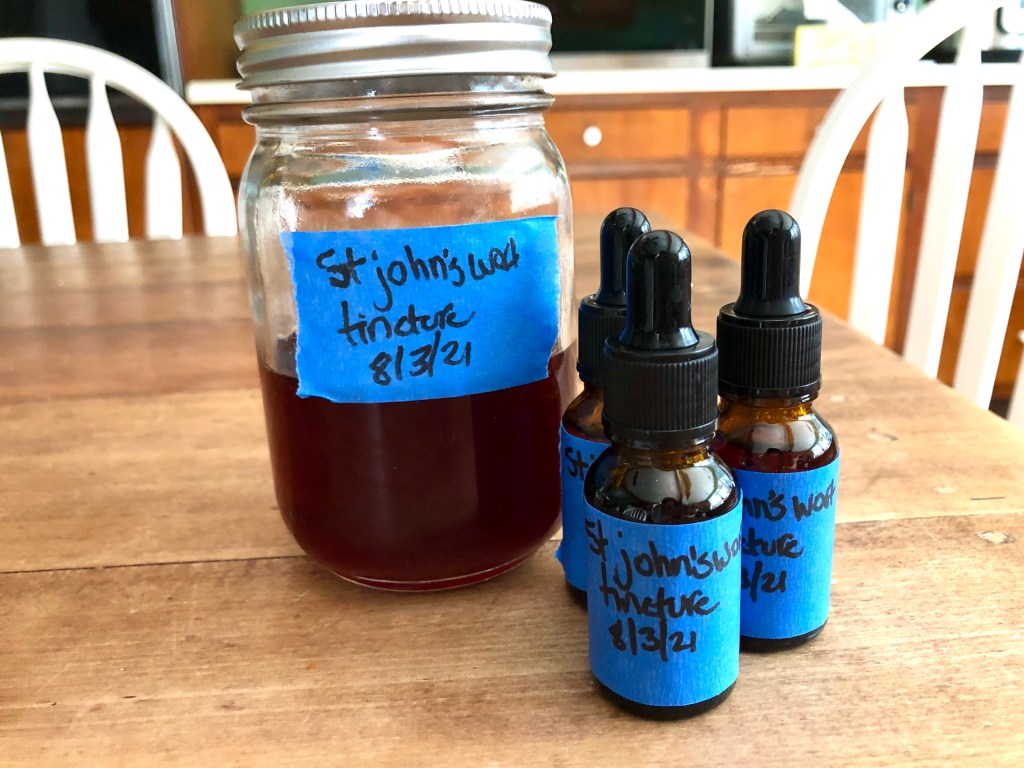
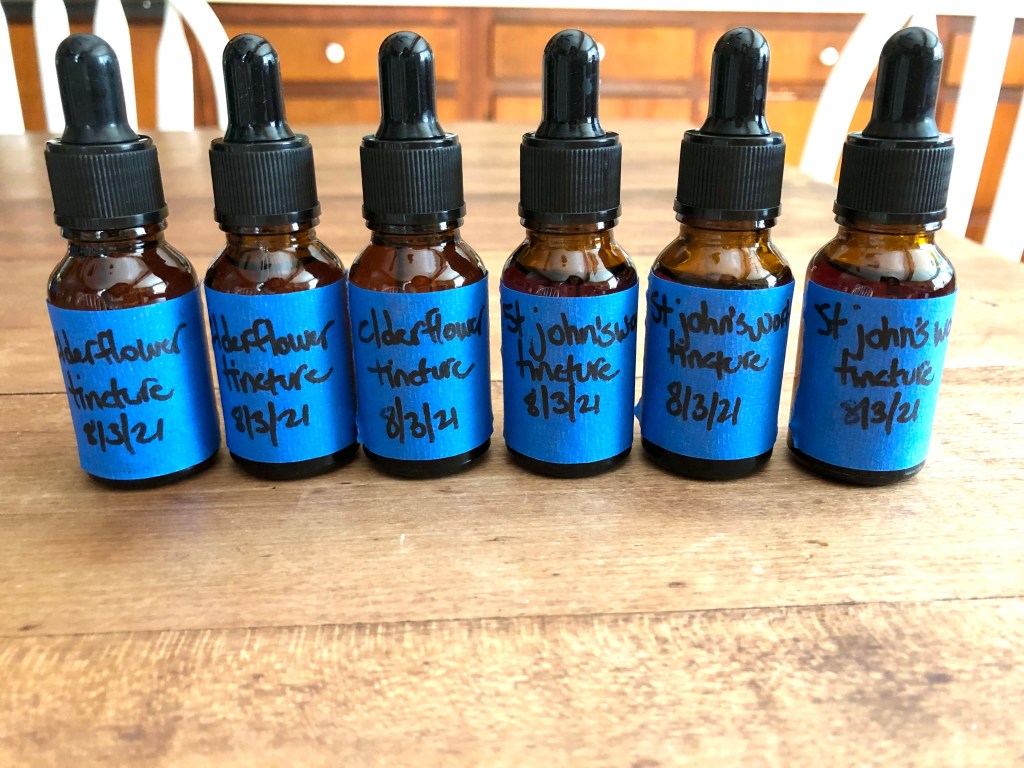
When it comes to Western herbalism, tinctures are an easy way to take medicine. Just put the drops in water and drink. My number one tincture, my favorite plant ally, is St. John’s Wort. Depression runs in my family, and it’s something that’s always with me, along with its friend, anxiety. Sometimes it’s just a small shadow in the corner and sometimes it threatens to take over. But it’s always been something I address in natural ways.

And before I talk about St. John’s Wort any further, if you’re thinking of trying it, make sure you read this article that lists side effects as well as contraindications with many pharmaceuticals. Educate yourself about your own health and always check with your health care professional before taking any new drugs, herbal or otherwise.

St. John’s Wort may reduce the symptoms of mild to moderate depression, anxiety, PMS, menopause, ADHD, can improve sleep, and more. My experience with it has been excellent, but I don’t take any pharmaceuticals and was aware to look out for possible side effects when I started taking it. (I never experienced any side effects.)

OK, so how do you make a tincture? Here you go!

Easy Tincture Recipe

1 clean pint mason jar with lid

bulk dried St. John’s Wort or other bulk dried herb

vodka or other flavorless alcohol

Label or tape

Fill the jar 1/3 to 1/2 full of dried herbs. Cover with vodka and screw on the lid. Label and date the jar and put it on a dark, dry shelf. Check it every day or so, giving it a gentle shake, topping up the jar with more vodka so the herbs stay covered. Let it sit for 4-6 weeks, shaking every once in a while, then strain through cheesecloth into a clean jar or into clean dropper bottles. Label and date the jar or bottles.

Health Disclaimer: Any statements or claims about the possible health benefits of herbs, essential oils, flower essences, or other plant medicine I write about on my blog have not been evaluated by the FDA and are not intended to diagnose, treat, prevent, or cure any disease or condition. The words in this post are my own opinions, based on my own experiences. Please see your health care professional before you take any supplement and if you need medical treatment of any kind.

Friday Favorites

You made it! It’s Friday and the weekend ahead is perfect with possibility. I’ll share a few resources that have inspired me lately in hopes that your heart will be encouraged.

Online Challenges:

Have you heard of #Last90Days Challenge? Rachel Hollis started this challenge so that we can all end the year strong. You can listen to this episode from the Rise Podcast to hear Rachel share the story behind the challenge and talk about her 5 to Thrive. I am participating this year and would love to know if you are as well!

If you’re into drawing, you can join Inktober, an online challenge to improve your drawing skills. Check it out on Instagram and follow the hashtag!

And if you’re into watercolor painting, Wildthorne is doing an art journal challenge and giveaway. Even if you don’t paint, check out this gorgeous Instagram and website. Alan gave me one of their handmade paint sets last Christmas and it was my favorite gift!

Cookbooks:

Since I am a new Ayurveda student, I bought a few Ayurvedic cookbooks to help me with my learning process. Here are two that are great for beginners that I’ve been cooking from the past couple of months.

Eat Feel Fresh: A Contemporary, Plant-Based Ayurvedic Cookbook by Sahara Rose Ketabi. This book is beautiful! Every single page has photos of flowers, gemstones, Sahara Rose, delicious food and of people and places in India. All of the recipes I’ve made so far were easy to follow and came out successfully. The coconut lime quinoa is a keeper!

The Everyday Ayurveda Cookbook: A Seasonal Guide to Eating and Living Well by Kate O’Donnell is so easy to cook with! The recipes are practical and simple with short ingredients lists and clear, light, and lovely photos. This one has recipes that you will make over and over because you don’t have to put much work into them.

Podcasts & Books:

Yep, Brendon Burchard’s podcast, The Brendon Show, definitely inspired me lots this past week. These episodes on Social Media Strategy and Email and Social Media Marketing were two I listened to at least twice.

In Episode 200 of What Should I Read Next podcast, Anne and her producer Brenna interviewed 8 guests of past episodes to see what recommendations they read, which ones they didn’t, and what was new in their reading lives.

I loved this episode of Just the Right Book podcast, Roxanne Coady interviewed Lori Gottlieb, author of Maybe You Should Talk to Someone. I immediately downloaded the book for Kindle and am enjoying it immensely!

And I must mention this book: The Abundance Project: 40 Days to More Wealth, Health, Love, and Happiness by Derek Rydall. I realized this summer, that I had some mindsets that were holding back my personal and business growth and success. I’m about halfway through and am going slowly, doing all the practices, taking notes, and intend to read it and his former book, Emergence, over and over, until the principles take root and become a natural part of my thinking, emotions, and actions.

Readers, I would love to know: what has inspired you this week?

Setting Intentions for Your Home and Your Life (Wellness Wednesday)

Outer order contributes to inner calm.” Gretchen Rubin

Have nothing in your house that you do not know to be useful or believe to be beautiful.” William Morris

Good Intentions

There are so many wellness habits we may be working on this fall to improve the quality of our lives: sleep, exercise, or mindfulness, or diet. It is absolutely necessary to build these healthy habits for living your best life. Today, though, I want to focus on another area that is just as personal: your home.

Your living space should reflect the kind of life you want to live. This means being intentional about what you want your life to look like. Have you ever spent time visualizing the home you want to live in? Have you written down words that reflect how you envision it? Do you want a warm, welcoming peaceful place to enjoy your life, and time with family and friends? Do you want to feel at ease and comforted whenever you walk through your door?

I set my intention years ago when I decided that I wanted my home to be peaceful and comforting to me so that I enjoyed being there every day, and so that my family and friends wanted to be there too. And I highly recommend that you take some time to think about the kind of life you want at home and write down a list of ways you want it to be. Stick it to your fridge door or inside a cabinet door so you can see it often.

Two Habits

Since I wanted a peaceful, comforting living space, I had to form two habits: 1. I had to clean my house regularly (bathrooms, kitchen surfaces, dusting, vacuuming, mopping), and 2. I had to regularly tidy and get rid of things I no longer used. This second habit is the key to easy, fast cleaning and an organized, tidy home, and it actually comes first.

Until I met Alan and moved into our very large 1850s house, I always lived in small apartments and houses with not much room for storage. So I got used to looking over my belongings and giving things away/taking things to Salvation Army every month or so. My mom did this regularly and I saw the wisdom in it. I always have a bag started with things we are finished using, wearing, reading, etc.

The More Stuff You Have, The Harder it is to Clean

You might think cleaning your house once a week is impossible, but what is behind the resistance? Does the task seem overwhelming to even think of? Is the overwhelm related to the amount of stuff you have accumulated in your home?

Think of the top of your dresser, for instance. Is it covered with stuff? Piles of clothes, bottles of makeup, loose change, trinkets, and knick-knacks? Do you find it easy to dust that dresser top? How often do you get around to it? I’m guessing if it’s covered with stuff, you don’t get to it often because it’s such a pain to take everything off to dust it. 

If you were able to put all the clothes where they belonged, put your bottles in a basket, and maybe just had 1-3 knick-knacks displayed, it would be a breeze to dust that dresser! To quote the title of Mari Kondo’s book, it really is life-changing and magical to tidy up.

Litmus Test for Tidying

Do you know what you own? I like to be able to locate anything I own without searching for it. When I can’t find something, I know it’s time to spend a few days tidying, and getting rid of things I don’t need anymore. This allows room for what is coming next in my life. If I am holding on to stuff I no longer need or use, this is symbolic of holding onto the past and not being willing to move forward in life. I don’t want that! No matter how good the past was, I want to have room in my life for the goodness and abundance that is coming next.

How to Tidy To Change Your Life

Marie Kondo recommends focusing on one category at a time. And if you have a whole day at a time to do this, then go ahead. Gather all the clothing in your home, pile it on your bed, and start deciding. But if you have a busy life, are a chronic pack rat or just don’t like to clean or tidy, I recommend focusing on one room at a time.

For example, start with your bedroom. And then break that down into manageable bites, like doing one dresser drawer each day. Then move on to your closet and do the top shelf first, and work your way down, one day at a time. After a week or so, depending on how many drawers and shelves you have, you’ll have a whole room done.

If you do it the KonMari way, she has you pull all the things in one category (like clothing) out from the space you’re going to tidy and hold each item in your hand. If it sparks joy, it’s a keeper; if it doesn’t, you can give it away to a friend or to goodwill, sell it, or recycle it.

After you’ve gone through the clothes from one drawer and decided what to keep, you can learn how to fold them using the KonMari Method: I learned this on Youtube. There are videos here and here. Even underwear and socks can be folded neatly!

When you first learn to fold this way, it will seem slow and awkward, especially if you could win a lifetime messy folder award (like me). But once you experience the thrill of opening your drawer and seeing all of your clothes at once, you will never go back to just stuffing stacks of clothes into a drawer. It actually is a timesaver!

Cleaning is Easy Now

Once you’ve gotten rid of excess stuff, you can tidy daily and pick a regular day or night to clean. If you have kids, they should each learn to tidy and clean; you’ll teach them healthy habits that will benefit them their entire lives.

On cleaning day, I like to do my bathroom and kitchen surfaces first, then dust furniture and shelves, vacuum, and mop. People often think because my home is clean that I enjoy cleaning. The truth: I don’t! But I do enjoy the result. And I like the sense of control I feel. I may not be able to change certain things in my life today, but I have control over the beauty and order in my home. And you do too!

If you’ve tidied using the KonMari Method, or some other way, share about it in comments!

My Favorite Books About Tidying and Housekeeping

Outer Order, Inner Calm by Gretchen Rubin

In this book, Gretchen shares 9 reasons why you want a clean, well-ordered living space.

The Life-Changing Magic of Tidying Up: The Japanese Art of Decluttering and Organizing by Marie Kondo

This is the classic that everyone should read. Marie shares her revolutionary method with plenty of how-tos.

Organized Simplicity: The Clutter-Free Approach to Intentional Living by Tsh Oxenreider

I read this as a young mom and it was very helpful for me to be more intentional with my home and family. She has helpful forms you can use and many natural cleaning recipes. If you are a parent, read this book!

Home Comforts: The Art & Science of Keeping House by Cheryl Mendelson

This is like the bible of housekeeping. If you need to know how to iron something, how to get a particular stain out of a tablecloth, how to clean every kind of surface you can imagine, or why you should even clean in the first place—you will find it all within these pages. I read this as a very young person and think every home should have a copy.

Aromatherapy Blends

Cleaning Day Blend

Place drops in diffuser, fill with distilled water and diffuse for 1-3 hours

2 drops Bergamot 

3 drops Lemon

2 drops Cedarwood

Aromatherapy Mopping Blend

Apply drops to bottom of steam mop or spray mop

6 drops Lemon

3 drops Tea Tree

2 drops Lavender