First Fig
by Edna St. Vincent Millay
My candle burns at both ends;
It will not last the night;
But ah, my foes, and oh, my friends–
It gives a lovely light!
You can find this poem in The Penguin Anthology of 20th Century American Poetry.
by Edna St. Vincent Millay
My candle burns at both ends;
It will not last the night;
But ah, my foes, and oh, my friends–
It gives a lovely light!
You can find this poem in The Penguin Anthology of 20th Century American Poetry.

I sat cross-legged on my yoga mat one morning at the beginning of practice and began to cry. The instructor was guiding us toward the place we wanted to be and told us to focus on that, rather than the stuff in our heads, and the things that were wrong.
I was weighted by much that was wrong–real and imagined. Things I have continually heaped on myself since my divorce and things that I wanted to change about my own life and surroundings. Ways I attempted to control circumstances so I could bring order to places in my mind and body that I felt were lacking. I was a mess–full of anxiety and wrapped tightly into a cocoon of sadness and guilt and darkness.
On the mat, I began to moved through the poses. The focus was on strength and the idea was that we are stronger than we think we are. The poses became more intense. I shook in holding poses, (planks, especially) and felt fatigue hitting me in waves as I did yet another vinyasa. But as I continued through the difficulty of the practice I felt stronger and calmer and more assured that my life was a thing of complicated beauty.
Off the mat, several hours later, I began to meditate on empowering thoughts. Then I wrote them down. You know what? All that anxiety and guilt and regret and need to control my surroundings just melted away! It was such a relief!
This was so helpful to me that I wanted to share my list with you. I encourage you to make your own–it’s actually kind of fun and I think you’ll feel anxiety slip away and a sense of calm and strength center you.
I can be my best self today.
I can tell the truth today.
I can enjoy my life today.
I can be kind and generous to myself today.
I can be kind and generous to others today.
I can bring ideas and solutions to work today.
I can accomplish what I need to today.
I can listen today.
I can say I’m sorry today.
I can release the past today.
I can learn today.
I can be enough today.
I can matter to others today.
I can love people today.
I can take care of my body today.
I can take care of my soul today.
I can love my children today.
I can love my husband today.
I can stay in the light and not hide today.
I can be a good friend today.
I can drink enough water today.
I can get outside and let Nature embrace me today.
I can laugh today.
I can communicate better today.
I can improve on yesterday today.
I can say no when I need to today.
I can say yes when it’s wholehearted today.
I can make mistakes and grow today.
I can be God’s child today.

(From Book of Pilgrimage in Rilke’s Book of Hours: Love Poems to God by Rainer Maria Rilke)
In deep nights I dig for you like treasure.
For all I have seen
that clutters the surface of my world
is poor and paltry substitute
for the beauty of you
that has not happened yet…
My hands are bloody from digging.
I lift them, hold them open in the wind,
so they can branch like a tree.
Reaching, these hands would pull you out of the sky
as if you had shattered there,
dashed yourself to pieces in some wild impatience.
What is this I feel falling now,
falling on this parched earth,
softly,
like a spring rain?
II, 34
by David Whyte
The face in the stone is a mirror looking into you.
You have gazed at the moving waters
you have seen the slow light, in the sky
above Lough Inagh, beneath you, streams have flowed,
and rivers of earth have moved beneath your feet,
but you have never looked into the immovability
of stone like this, the way it holds you, gives you
not a way forward but a doorway in, staunches
your need to leave, becomes faithful by going nowhere
something that wants you to stay here and look back,
be weathered by what comes to you, like the way you too
have travelled from so far away to be here, once reluctant
and now as solid and as here and as willing
to be touched as everything you have found.
You can find this poem in the collection The Bell and The Blackbird by David Whyte.
by Sara Teasdale
It will not hurt me when I am old.
A running tide where moonlight burned
Will not sting me like silver snakes;
The years will make me sad and cold,
It is the happy heart that breaks.
The heart asks more than life can give,
When that is learned, then all is learned;
The waves break fold on jewelled fold,
But beauty itself is fugitive,
It will not hurt me when I am old.
You can find this poem in the collection The Penguin Anthology of 20th Century American Poetry.
Happy Friday! Here is a list of five books I’m currently reading. I would love to know what you are reading lately!
Jean Vanier: Portrait of a Free Man by Anne-Sophie Constant will be published by Plough Publishing House on August 4th. Jean Vanier, the founder of the L’Arche community in France passed away on May 7th. I’ve read his book Community and Growth, have heard him interviewed on Krista Tippett’s On Being podcast, and have a great respect for him and the work he did. He served those who the modern world often sees as “the least of these”, and I was introduced to him through some of Henri Nouwen’s writings. I’m looking forward to an inspiring read about this modern spiritual giant who has left behind a beautiful legacy.
I am listening to The Clockmaker’s Daughter by Kate Morton on audiobook. It is read by Joanne Froggatt (Lady Mary’s maid, Anna Bates, from Downton Abbey) and is a gorgeous, intricate, many-layered tale containing murder, mystery, ghosts, and voices from the past and present. I haven’t read a Kate Morton book in several years and am truly enjoying this book!
She’s My Dad: A Father’s Transition and A Son’s Redemption by Jonathan K. Williams with Paula Stone Williams is an eye-opening, heart-wrenching true story of a Christian minister’s family turned upside-down by the revelation that their father is a woman. Told through the son’s eyes, the story is filled with many references to charismatic 80s and 90s church culture in the U.S., ( with which I am, for better or worse, familiar). I am only about a third of the way through and will give a full review when I finish the book.
I just began reading In This House of Brede by Rumer Godden last weekend. It’s the story of a successful businesswoman in her mid-forties who decides to join a Benedictine order of nuns in Sussex, England. At this stage, she has just taken the train to the Abbey and has been allowed inside. This is going to be a wonderful story, I think. This is my first Rumer Godden book for adults; I’ve only read her children’s books. (My favorite children’s book of hers–and all-time favorite Christmas book is The Story of Holly and Ivy.) She has several titles I am adding to my TBR list…
As so many others are doing because of her recent, untimely death, I am reading Searching For Sunday: Loving, Leaving, and Finding Church by beloved writer Rachel Held Evans. Because I have struggled with my relationship to church, I want to read the words of someone who has been there and understands.
by Wendell Berry
For whatever is let go
there’s a taker.
The living discovers itself
where no preparation
was made for it,
where its only privilege
is to live if it can.
The window flies from the dark
of the subway mouth
into the sunlight
stained with the green
of the spring weeds
that crowd the improbable
black earth
of the embankment,
their stout leaves
like the tongues and bodies
of a herd, feeding
on the new heat,
drinking in the seepage
of the stones:
the freehold of life,
triumphant
even in the waste
of those who possess it.
But it is itself the possessor,
we know at last,
seeing it send out weeds
to take back
whatever is left:
Proprietor, pasturing foliage
on the rubble,
making use
of the useless–a beauty
we have less than not
deserved.
This poem can be found in New Collected Poems by Wendell Berry.

I woke at 6:38 in the morning, just 22 minutes before my alarm would go off. I’ve been waking before my alarm most days this spring, but lie there hoping I can get just a little more sleep.
After driving my daughter to school and eating breakfast with Alan, I decided to dedicate my day to working on making un-paper towels. One of the many ways we need to change our habits is to stop using, or at least drastically cut down on our use of, paper towels.
I’ve been scrutinizing the family’s paper towel use and notice most of the time we are using them to wipe up a minor spill, dry hands, or dry a cup or dish. It’s true that I use them to clean, but I have microfiber cloths, rags, and sponges, so I just need to stop reaching for paper towels.
With fabric I had, I sewed up a dozen towels that are flannel on one side and muslin on the other, and another half dozen with linen on one side and muslin on the other.
The pattern was a 13″ x 12″ rectangle, that, when sewn with a 1/2″ seam on each side, made 12″ x 11″ un-paper towels, which is the same size as the brand of paper towels I’ve been buying. I drew a pencil line across at the 6″ mark, and then sewed along the line, so they easily fold in half. And then I folded them in thirds, Kon-Mari style. Since I have a vertical paper towel holder, I couldn’t roll my new towels, so I removed the roller and stacked them in the space.

Now that I’ve successfully made my first un-paper towels, we have to form the habit of using them. Keeping a fresh supply next to the sink will help. Of course, I’ll keep a couple rolls of paper towels in the house for really dirty jobs, but if they’re out-of-sight, I hope they’ll be out-of-mind too.
This was a tiny step toward a more planet-friendly daily life, but it felt like a positive one. Alan and I have been increasingly saddened by the continuous photos of plastic waste in the oceans, on beaches, and harming and killing sea birds and animals. We are examining our habits and purchases and asking ourselves: Is this necessary? Is there another way? What can we do right now?
And, in fact, there are so many practical actions each one of us can take right now to honor and protect the planet we call home. Because, as the slogan I’ve seen on Instagram a lot lately says, “There is no Planet B.”
I’d love to be inspired by how you are finding ways to live in a planet-healthy fashion. Here are a few places where you can go to learn about plastic waste in the oceans and to explore ways you can reduce your plastic usage.
How to Reduce Plastic Use in Your Home

by Jane Kenyon
How much better it is
to carry wood to the fire
than to moan about your life.
How much better
to throw garbage
onto the compost, or to pin the clean
sheet on the line
with a gray-brown wooden clothes pins!
You can find this poem in the collection Otherwise by Jane Kenyon.
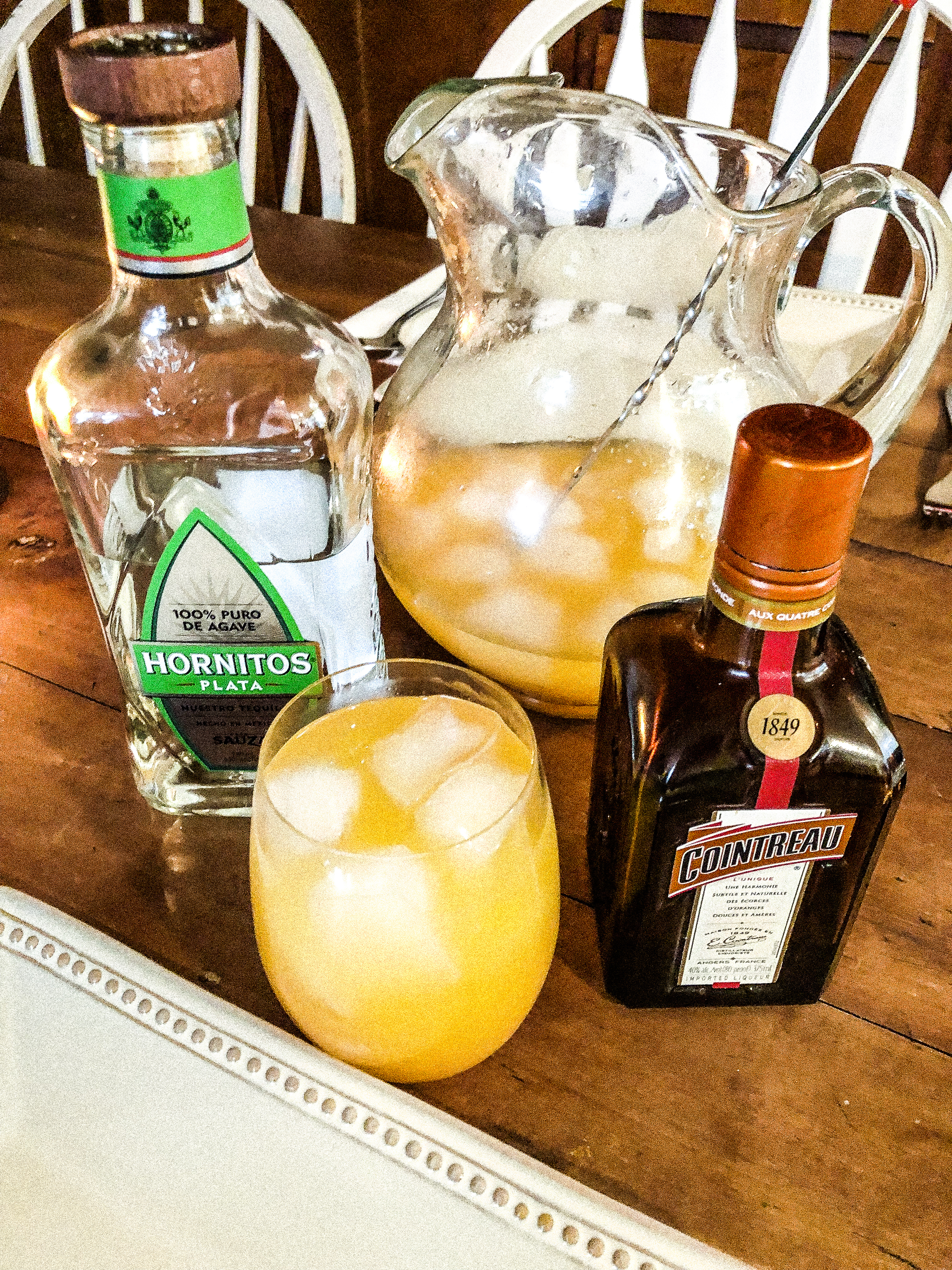
I wanted to make Blood Orange Margaritas for Cinco de Mayo but didn’t get to the grocery store in time. Since there were Cara Cara oranges in the fruit bowl, so I decided to go with them. After consulting several recipes online, I created my own recipe and if I do say so myself, these Margaritas are perfect for a party or for any night you feel like a little celebrating is in order.
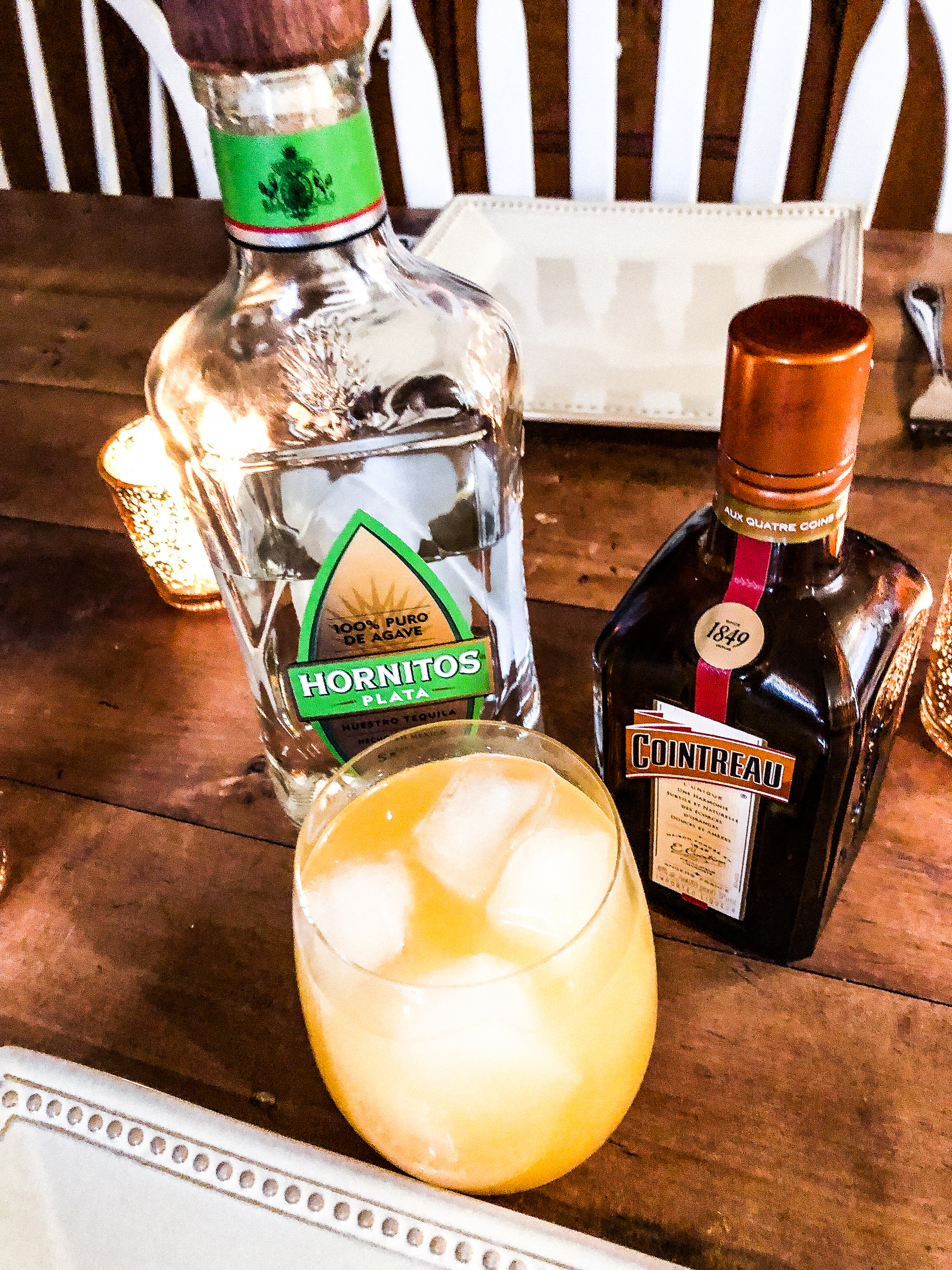
(Serves 3-6, depending on glass size)
1 cup Cara Cara orange juice
1/4 cup lime juice
3/4 cup Tequila
1/3 cup Cointreau or other triple sec
1/4 cup simple syrup
about 20 ice cubes
Stir ingredients in a pitcher and serve.


 Life of Kim