Evening Poetry, November 5

The Things That Count
by Ella Wheeler Wilcox

Now, dear, it isn’t the bold things,
Great deeds of valour and might,
That count the most in the summing up of life at the end of the day.
But it is the doing of old things,
Small acts that are just and right;
And doing them over and over again, no matter what others say;
In smiling at fate, when you want to cry, and in keeping at work when you want to play—
Dear, those are the things that count.

And, dear, it isn’t the new ways
Where the wonder-seekers crowd
That lead us into the land of content, or help us to find our own.
But it is keeping to true ways,
Though the music is not so loud,
And there may be many a shadowed spot where we journey along alone;
In flinging a prayer at the face of fear, and in changing into a song a groan—
Dear, these are the things that count.

My dear, it isn’t the loud part
Of creeds that are pleasing to God,
Not the chant of a prayer, or the hum of a hymn, or a jubilant shout or song.
But it is the beautiful proud part
Of walking with feet faith-shod;
And in loving, loving, loving through all, no matter how things go wrong;
In trusting ever, though dark the day, and in keeping your hope when the way seems long—
Dear, these are the things that count.

Find this poem at Poets.org
Evening Poetry, November 4

This post contains Amazon affiliate links. If you click through and make a purchase, I will receive a small compensation at no extra cost to you. This helps keep my blog ad-free.

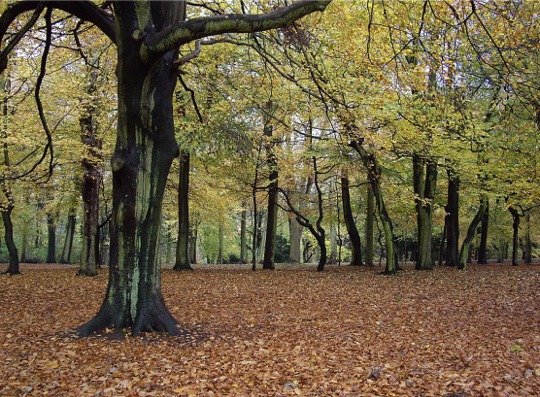
Autumn beech trees, Sefton Park by Tom Pennington is licensed under CC-BY-SA 2.0
Beeches
by David St. John

The forest is its own thanksgiving
Walking a mile or so from the road
Past the lake & ancient post office
I skim the long bodies of the beech trees

The elegant ascension of their slender trunks
A kind of gorgeous illusory play
Of white bars against the dark ochre matting
Of the earth below

Peace is where you find it
As here the last secret of the dawn air mixes
With a nostalgia so perfumed by misery
Only the rhythm of the walk itself

Carries me beyond the past
To say I miss you is to say almost nothing
To say the forest is the sanctuary of ghosts
Is only the first step of my own giving way—

Not the giving up—just the old giving thanks

You can find this poem in The Red Leaves of Night.

Evening Poetry, November 3

This post contains Amazon affiliate links. If you click through and make a purchase, I will receive a small compensation at no extra cost to you. This helps keep my blog ad-free.

Harvest Time by George Inness (American, 1825u20131894) is licensed under CC-CC0 1.0
A Song For Merry Harvest 
by Eliza Cook

Bring forth the harp, and let us sweep its fullest, loudest string.
The bee below, the bird above, are teaching us to sing
A song for merry harvest; and the one who will not bear
His grateful part partakes a boon he ill deserves to share.
The grasshopper is pouring forth his quick and trembling notes;
The laughter of the gleaner’s child, the heart’s own music floats.
Up! up! I say, a roundelay from every voice that lives
Should welcome merry harvest, and bless the God that gives.

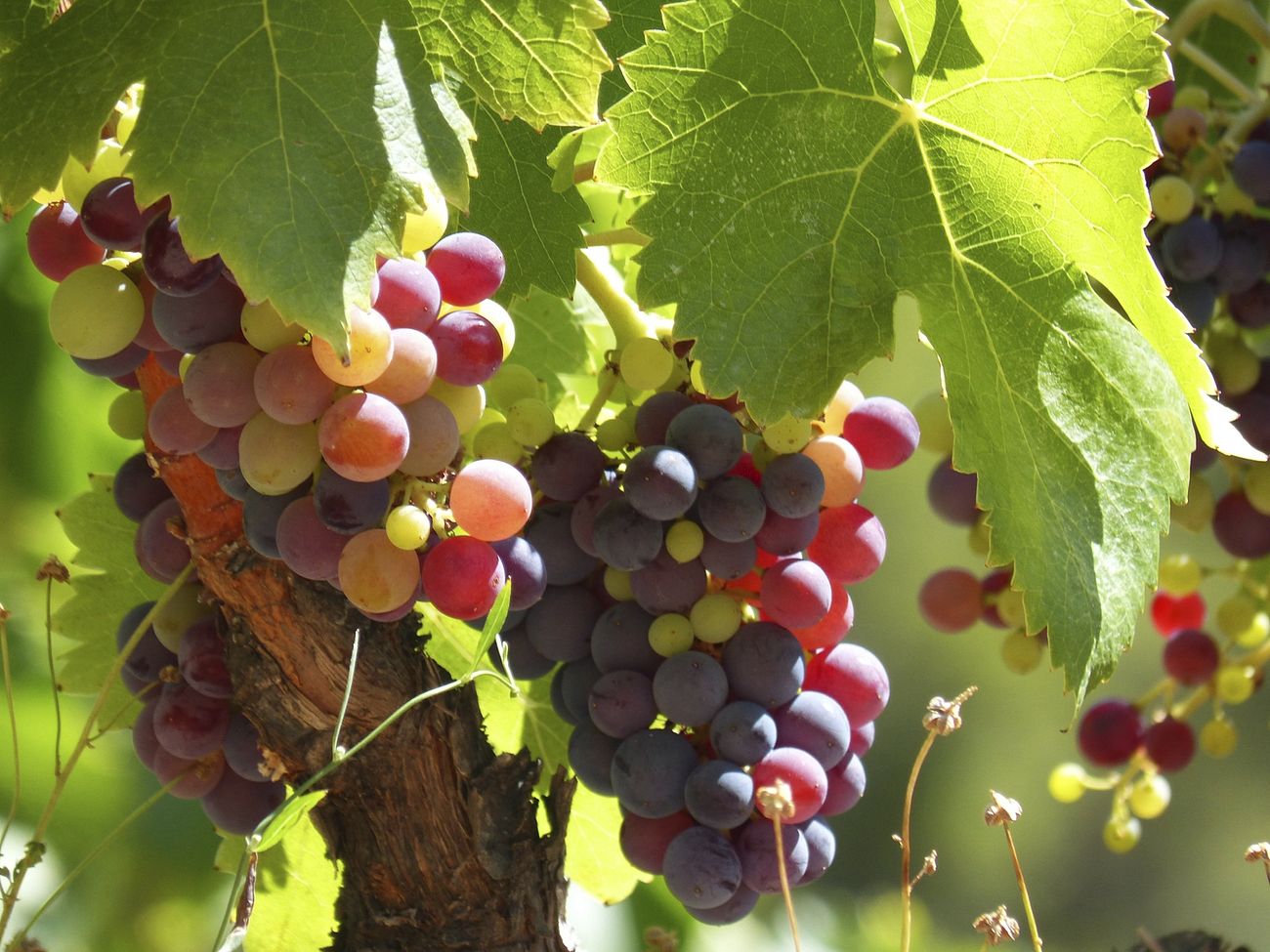
The buoyant soul that loves the bowl may see the dark grapes shine,
And gems of melting ruby deck the ringlets of the vine;
Who prizes more the foaming ale may gaze upon the plain,
And feast his eye with yellow hops and sheets of bearded grain;
The kindly one whose bosom aches to see a dog unfed
May bend the knee in thanks to see the ample promised bread.
Awake, then, all! ’tis Nature’s call, and every voice that lives
Shall welcome merry harvest, and bless the God that gives.

You can find this poem in Melaia and Other Poems.

Evening Poetry, November 2

This post contains Amazon affiliate links. If you click through and make a purchase, I will receive a small compensation at no extra cost to you. This helps keep my blog ad-free.

Photo by fauxels on Pexels.com
Perhaps the World Ends Here 
by Joy Harjo

The world begins at a kitchen table. No matter what, we must eat to live.

The gifts of earth are brought and prepared, set on the table. So it has been since creation, and it will go on.

We chase chickens or dogs away from it. Babies teethe at the corners. They scrape their knees under it.

It is here that children are given instructions on what it means to be human. We make men at it, we make women.

At this table we gossip, recall enemies and the ghosts of lovers.

Our dreams drink coffee with us as they put their arms around our children. They laugh with us at our poor falling-down selves and as we put ourselves back together once again at the table.

This table has been a house in the rain, an umbrella in the sun.

Wars have begun and ended at this table. It is a place to hide in the shadow of terror. A place to celebrate the terrible victory.

We have given birth on this table, and have prepared our parents for burial here.

At this table we sing with joy, with sorrow. We pray of suffering and remorse. We give thanks.

Perhaps the world will end at the kitchen table, while we are laughing and crying, eating of the last sweet bite.

You can find this poem in The Woman Who Fell From the Sky.

Evening Poetry, November 1

This post contains Amazon affiliate links. If you click through and make a purchase, I will receive a small compensation at no extra cost to you. This helps keep my blog ad-free.

When Giving Is All We Have 
by Alberto Ríos

                                              One river gives
                                              Its journey to the next.

We give because someone gave to us.
We give because nobody gave to us.

We give because giving has changed us.
We give because giving could have changed us.

We have been better for it,
We have been wounded by it—

Giving has many faces: It is loud and quiet,
Big, though small, diamond in wood-nails.

Its story is old, the plot worn and the pages too,
But we read this book, anyway, over and again:

Giving is, first and every time, hand to hand,
Mine to yours, yours to mine.

You gave me blue and I gave you yellow.
Together we are simple green. You gave me

What you did not have, and I gave you
What I had to give—together, we made

Something greater from the difference.

You can find this poem in A Small Story About the Sky.


Evening Poetry, Halloween October 31

Misty hillside north of Blaengarw by Jaggery is licensed under CC-BY-SA 2.0
Samhain by Annie Finch

(The Celtic Halloween)

In the season leaves should love,
since it gives them leave to move
through the wind, towards the ground
they were watching while they hung,
legend says there is a seam
stitching darkness like a name.

Now when dying grasses veil
earth from the sky in one last pale
wave, as autumn dies to bring
winter back, and then the spring,
we who die ourselves can peel
back another kind of veil

that hangs among us like thick smoke.
Tonight at last I feel it shake.
I feel the nights stretching away
thousands long behind the days
till they reach the darkness where
all of me is ancestor.

I move my hand and feel a touch
move with me, and when I brush
my own mind across another,
I am with my mother's mother.
Sure as footsteps in my waiting
self, I find her, and she brings

arms that carry answers for me,
intimate, a waiting bounty.
"Carry me." She leaves this trail
through a shudder of the veil,
and leaves, like amber where she stays,
a gift for her perpetual gaze.

Find this poem on the Poetry Foundation website.

Evening Poetry, October 30

Theme in Yellow by Carl Sandburg

I spot the hills
With yellow balls in autumn.
I light the prairie cornfields
Orange and tawny gold clusters
And I am called pumpkins.
On the last of October
When dusk is fallen
Children join hands
And circle round me
Singing ghost songs
And love to the harvest moon;
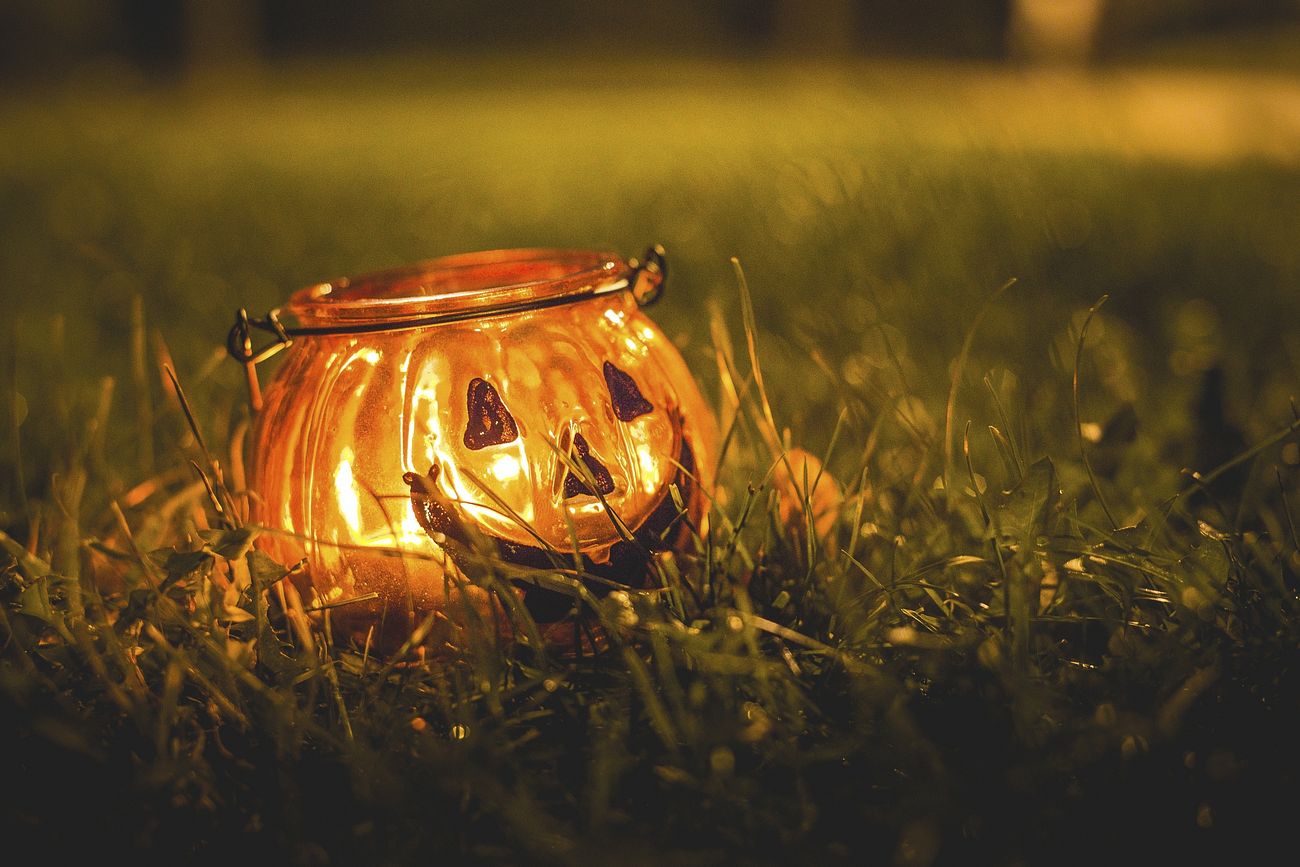
I am a jack-o'-lantern
With terrible teeth
And the children know
I am fooling.

You can find this poem on the Poetry Foundation website.

Evening Poetry, October 29

To Autumn by John Keats

Season of mists and mellow fruitfulness,
   Close bosom-friend of the maturing sun;
Conspiring with him how to load and bless
   With fruit the vines that round the thatch-eves run;
To bend with apples the moss'd cottage-trees,
   And fill all fruit with ripeness to the core;
      To swell the gourd, and plump the hazel shells
   With a sweet kernel; to set budding more,
And still more, later flowers for the bees,
Until they think warm days will never cease,
      For summer has o'er-brimm'd their clammy cells.

Who hath not seen thee oft amid thy store?
   Sometimes whoever seeks abroad may find
Thee sitting careless on a granary floor,
   Thy hair soft-lifted by the winnowing wind;
Or on a half-reap'd furrow sound asleep,
   Drows'd with the fume of poppies, while thy hook
      Spares the next swath and all its twined flowers:
And sometimes like a gleaner thou dost keep
   Steady thy laden head across a brook;
   Or by a cyder-press, with patient look,
      Thou watchest the last oozings hours by hours.

Where are the songs of spring? Ay, Where are they?
   Think not of them, thou hast thy music too,—
While barred clouds bloom the soft-dying day,
   And touch the stubble-plains with rosy hue;
Then in a wailful choir the small gnats mourn
   Among the river sallows, borne aloft
      Or sinking as the light wind lives or dies;
And full-grown lambs loud bleat from hilly bourn;
   Hedge-crickets sing; and now with treble soft
   The red-breast whistles from a garden-croft;
      And gathering swallows twitter in the skies.

You can find this poem on the Poetry Foundation.

Evening Poetry, October 28

All Hallows by Louise Glück

Even now this landscape is assembling.
The hills darken. The oxen
sleep in their blue yoke,
the fields having been
picked clean, the sheaves
bound evenly and piled at the roadside
among cinquefoil, as the toothed moon rises:

This is the barrenness
of harvest or pestilence.
And the wife leaning out the window
with her hand extended, as in payment,
and the seeds
distinct, gold, calling
Come here
Come here, little one

And the soul creeps out of the tree.

You can find this poem on the Poetry Foundation website.


Evening Poetry, October 27

This post contains Amazon affiliate links. If you click through and make a purchase, I will receive a small compensation at no extra cost to you. This helps keep my blog ad-free.

Tasting the Wild Grapes by Mary Oliver

The red beast
who lives in the side of these hills
won’t come out for anything you have:
money or music. Still, there are moments
heavy with light and good luck. Walk
quietly under these tangled vines
and pay attention, and one morning
something will explode underfoot
like a branch of fire; one afternoon
something will flow down the hill
in plain view, a muscled sleeve the color
of all October! And forgetting
everything you will leap to name it
as though for the first time, your lit blood
rushing not to a word but a sound
small-boned, thin-faced, in a hurry,
lively as the dark thorns of the wild grapes
on the unsuspecting tongue!
The fox! The fox!

You can find this poem in American Primitive: Poems.