This post contains Amazon affiliate links. If you click through and make a purchase, I will receive a small compensation at no extra cost to you. This helps keep my blog ad-free.
Fall Song by Mary Oliver

Another year gone, leaving everywhere
its rich spiced residues: vines, leaves,

the uneaten fruits crumbling damply
in the shadows, unmattering back

from the particular island
of this summer, this NOW, that now is nowhere

except underfoot, moldering
in that black subterranean castle

of unobservable mysteries - roots and sealed seeds
and the wanderings of water. This

I try to remember when time's measure
painfully chafes, for instance when autumn

flares out at the last, boisterous and like us longing
to stay - how everything lives, shifting

from one bright vision to another, forever
in these momentary pastures.

You can find this poem in American Primitive: Poems.
This post contains Amazon affiliate links. If you click through and make a purchase, I will receive a small compensation at no extra cost to you. This helps keep my blog ad-free.
We Are of a Tribe
by ALBERTO RÍOS

We plant seeds in the ground
And dreams in the sky,

Hoping that, someday, the roots of one
Will meet the upstretched limbs of the other.

It has not happened yet.
We share the sky, all of us, the whole world:

Together, we are a tribe of eyes that look upward,
Even as we stand on uncertain ground.

The earth beneath us moves, quiet and wild,
Its boundaries shifting, its muscles wavering.

The dream of sky is indifferent to all this,
Impervious to borders, fences, reservations.

The sky is our common home, the place we all live.
There we are in the world together.

The dream of sky requires no passport.
Blue will not be fenced. Blue will not be a crime.

Look up. Stay awhile. Let your breathing slow.
Know that you always have a home here.

You can find this poem in Poetry of Presence: An Anthology of Mindfulness Poems.
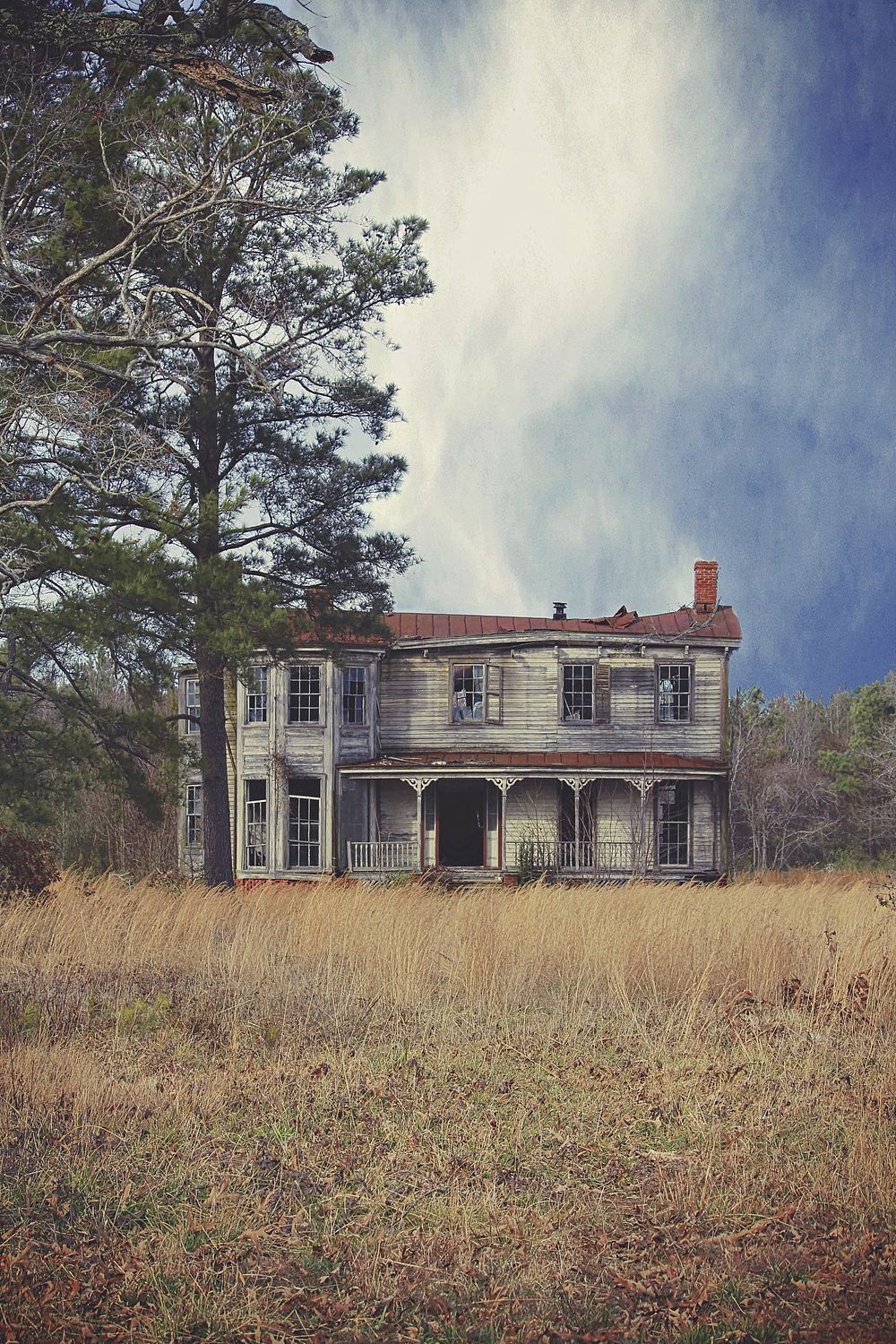
The Empty House
BY WALTER DE LA MARE

See this house, how dark it is
Beneath its vast-boughed trees!
Not one trembling leaflet cries
To that Watcher in the skies—
‘Remove, remove thy searching gaze,
Innocent of heaven’s ways,
Brood not, Moon, so wildly bright,
On secrets hidden from sight.’

‘Secrets,’ sighs the night-wind,
‘Vacancy is all I find;
Every keyhole I have made
Wails a summons, faint and sad,
No voice ever answers me,
Only vacancy.’
‘Once, once … ’ the cricket shrills,
And far and near the quiet fills
With its tiny voice, and then
Hush falls again.

Mute shadows creeping slow
Mark how the hours go.
Every stone is mouldering slow.
And the least winds that blow
Some minutest atom shake,
Some fretting ruin make
In roof and walls. How black it is
Beneath these thick boughed trees!

Find this poem on the Poetry Foundation website.
A Reminiscence
BY RICHARD O. MOORE

Held in a late season
At a shifting of worlds,
In the golden balance of autumn,
Out of love and reason

We made our peace;
Stood still in October
In the failing light and sought,
Each in the other, ease

And release from silence,
From the slow damnation
Of speech that is weak
And falls from silence.

In the October sun
By the green river we spoke,
Late in October, the leaves
Of the water maples had fallen.

But whatever we said
In the bright leaves was lost,
Quick as the leaf-fall,
Brittle and blood red.


                 For Kenneth Rexroth, 1950

You can find this poem on the Poetry Foundation website.
This post contains Amazon affiliate links. If you click through and make a purchase, I will receive a small compensation at no extra cost to you. This helps keep my blog ad-free.
Kindnessby Anya Silver
Last week, a nurse pulled a warm blanket
from a magical cave of heated cotton
and lay it on my lap, even wrapping
my feet. She admired my red sandals.
Once, a friend brought me a chicken
she’d roasted and packed with whole lemons.
I ate it with my fingers while it was still warm.
Kindnesses appear, then disappear so quickly
that I forget their brief streaks: they vanish,
while cruelty pearls its durable shell.
Goodness streams like hot water through my hair
and down my skin, and I’m able to live
again with the ache. Love wakens the world.
Kindness is my mother, sending me a yellow dress in the mail
for no reason other than to watch me twirl.
You can find this poem inHealing the Divide: Poems of Kindness & Connection.
This post contains Amazon affiliate links. If you click through and make a purchase, I will receive a small compensation at no extra cost to you. This helps keep my blog ad-free.
Here’s a very short list of three books I finished reading in the past week. Enjoy!
No Mud, No Lotus: The Art of Transforming Suffering by Thich Nhat Hanh is one of the late teacher’s most-read books. When I was in my 200-hr yoga teacher training, our teacher had a shirt that said “Yes Mud, Yes Lotus”. It became something of a trend and other women in the training were seen wearing them soon after.
I started reading this book when I was feeling a particularly strong wave of grief this summer after my son moved out West. It had been sitting in the stack near my bed for a year or more and it called to me. If you’ve ever read a book by Thich Nhat Hanh, you know how gentle, direct, and simple yet deep his writings are. They are practical and get right to the heart of human suffering and he shows you how to access peace through the simple act of breathing, through slowing down and living with mindfulness. He encourages love, peacefulness, gratitude for what we have, paying attention to our lives, and not waiting to be happy while we go through suffering. And there are many practices to try, at the end of the book.
The Raging Storm by Ann Cleeves is the third mystery in the Two Rivers (Detective Matthew Venn series). It started out with a murder in a coastal town, a storm with lashing rain, impossible waves, a treacherous coastal path. I loved the feel for Fall reading. And it was good for about halfway through and then I began to lose interest. I think it’s that the people who were being killed off weren’t loathsome enough to be glad they got their just desserts and they weren’t innocent and nice enough to feel sorry for. I just didn’t care. I do recommend Ann Cleeves Vera Stanhope series (set in Northumberland, England) and her Shetland series (set in the–you guessed it–Shetland Islands in Scotland), so if you want great British mysteries definitely give either or both of those a read.
The Enchanted Life: Reclaiming the Magic and Wisdom of the Natural World by Sharon Blackie was one I started last year. Her books are dense with myth, fairytale, poetry, and many personal stories from many different creative people from around the world. She is such a richly storied author, and she’s lived all over the British Isles, so I thoroughly enjoy reading about her experiences. This book was no different. And she had reflection questions interspersed throughout to help the reader take what we were reading and make it part of us. Her chapters on “The Mythic Imagination”, “Coming Home to Ourselves”, and “An Ear to the Ground” were my favorites. She is an advocate for rooting in and learning to know the place we live, for however long we are there., and for living a slower, creative, and more imaginative life. If any of these themes spark something in you, you’ll enjoy this book.
I hope you enjoyed a little glimpse into my current reading life. If you enjoyed this post, you will also like reading my Substack. Here’s my latest post. You can subscribe for free to read one free post a week, or subscribe for $5 per month for access to all my posts, plus the archive. Why become a paid Substack subscriber? To support my writing on Substack plus this blog which is a gift to you: an ad-free, restful, and quiet place among increasingly busy, loud, and frenetic blogs and websites.
I’d love to know what you’re reading right now. Share in comments below!
This post contains Amazon affiliate links. If you click through and make a purchase, I will receive a small compensation at no extra cost to you. This helps keep my blog ad-free.
The Autumnby Elizabeth Barrett Browning
Go, sit upon the lofty hill,
And turn your eyes around,
Where waving woods and waters wild
Do hymn an autumn sound.
The summer sun is faint on them —
The summer flowers depart —
Sit still — as all transform'd to stone,
Except your musing heart.
How there you sat in summer-time,
May yet be in your mind;
And how you heard the green woods sing
Beneath the freshening wind.
Though the same wind now blows around,
You would its blast recall;
For every breath that stirs the trees,
Doth cause a leaf to fall.
Oh! like that wind, is all the mirth
That flesh and dust impart:
We cannot bear its visitings,
When change is on the heart.
Gay words and jests may make us smile,
When Sorrow is asleep;
But other things must make us smile,
When Sorrow bids us weep!
The dearest hands that clasp our hands, —
Their presence may be o'er;
The dearest voice that meets our ear,
That tone may come no more!
Youth fades; and then, the joys of youth,
Which once refresh'd our mind,
Shall come — as, on those sighing woods,
The chilling autumn wind.
Hear not the wind — view not the woods;
Look out o'er vale and hill-
In spring, the sky encircled them —
The sky is round them still.
Come autumn's scathe — come winter's cold —
Come change — and human fate!
Whatever prospect Heaven doth bound,
Can ne'er be desolate.
You can find this poem in The Complete Works of Elizabeth Barrett Browning.
This post contains Amazon affiliate links. If you click through and make a purchase, I will receive a small compensation at no extra cost to you. This helps keep my blog ad-free.
October
BY ROBERT FROST
O hushed October morning mild,
Thy leaves have ripened to the fall;
Tomorrow’s wind, if it be wild,
Should waste them all.
The crows above the forest call;
Tomorrow they may form and go.
O hushed October morning mild,
Begin the hours of this day slow.
Make the day seem to us less brief.
Hearts not averse to being beguiled,
Beguile us in the way you know.
Release one leaf at break of day;
At noon release another leaf;
One from our trees, one far away.
Retard the sun with gentle mist;
Enchant the land with amethyst.
Slow, slow!
For the grapes’ sake, if they were all,
Whose leaves already are burnt with frost,
Whose clustered fruit must else be lost—
For the grapes’ sake along the wall.
You can find this poem inThe Poetry of Robert Frost: The Collected Poems, Complete and Unabridged.
This post contains Amazon affiliate links. If you click through and make a purchase, I will receive a small compensation at no extra cost to you. This helps keep my blog ad-free.
What Trees Dream Ofby Danusha Laméris
This one thinks, let me be the slender bow
of the violin. Another, the body of the instrument,
burnished, the color of amber.
One imagines life as a narrow boat
crossing water,
a light mist of salt on the prow.
And still another &emdash; planed down to planks,
then hammered into shelter
toices vibrating through the rafters.
We do not notice their pleasure,
the slight hum of the banister
beneath our palms,
The satisfaction of the desk
as we tap our pens, impatiently,
upon its weathered surface.
They have ferried us
across rough seas
to lands that smelled of cinnamon
housed our senators,
who pace the creaky floors, debating,
carried arrowheads to pierce our enemies.
We have boiled their pulp, pressed it
into thin, white sheets of paper
on which we describe all of the above in great detail.
And when we die
they hold our empty forms
in bare cedar
until the moment &emdash; and how they long for this,
when we meet again in the blackened soil
and they take us back
in their embrace, carry us
up the length of their bodies
into the glittery, trembling movement of the leaves.
You can find this poem in The Moons of August.
This post contains Amazon affiliate links. If you click through and make a purchase, I will receive a small compensation at no extra cost to you. This helps keep my blog ad-free.
Last night I attended a women’s circle for the very first time. It was led by Molly Remer, author of Walking With Persephone, (recommended for mid-life women), as well as several books of poetry and prayers, and co-owner of Brigid’s Grove. Molly leads a goddess-centered life and her books, journals, products, and online offerings reflect this.
Take a deep breath. Inhale deep, exhale long and slowwww. You are not in danger of being eaten by a bear. Because if you’re part of a religion with only male god/gods, the word “goddess” can sound very upsetting and threatening to your belief system. My roots are in Christianity so I know a lot about male-centric religion and the fear associated with thinking outside those parameters.
What I’ve been learning over the past several years is that much of the world worshipped either female only or female and male deities for much of human history. The church came crashing in and tried to stamp out spirituality that was connected to females or the earth. Celebrations and feast days were stolen and replace with Christian ones with Christian saints to celebrate and pray to.
Let me be clear that I still love Christ and love everything I’ve learned so far about him. I still love the story of his miraculous and humble birth, his love for the poor, sick, weak, and “sinful”, his way of speaking out against hypocrisy and the burden of religious expectation. His compassion. His love for others. Even though I’m not in a church anymore, I still listen to lovely choral music or even worship songs and sing them sometimes. I still read the Psalms and other parts of the Bible that uplift and encourage.
But I’m curious, too, about the myths and stories of goddesses from the past, and, in particular, Celtic spirituality (sans human sacrifice, of course.) The old ways. Even Jeremiah 6:16 says, “Stand at the crossroads and look; ask for the ancient paths, ask where the good way is, and walk in it, and you will find rest for your souls.”
That’s what I’m doing. I’m standing at the crossroads, searching, asking for the ancient paths. Asking where the good way is. Not the white American evangelical or charismatic Christian versions of the good way. Something much further back in time than that. More wild than that. What’s at the edges, not the mainstream. Ok, enough of defending my why.
I went to Molly’s circle and was welcomed in immediately. It was a sweet, and dare I say, sacred space. No one was praying to anyone or doing demon worship or muttering scary words. Nothing made me feel on alert, afraid, constricted, or freaked out. It was just a group of women reading some poetry, discussing what mystery meant to them, listening to a song, reading a little more poetry, journaling, a little more discussion, and closing (on time) with a blessing (again, with no weird words). Everyone was kind, respectful, and listened more than they spoke. This was the first time I’ve ever felt comfortable sharing in an online group. And I was really glad I decided to go.
So that was my experience at a women’s circle last night. I plan to attend next month as well. I’d love to hear if any of you have ever been to women’s circles outside of a church setting and what it’s been like for you.




 Life of Kim