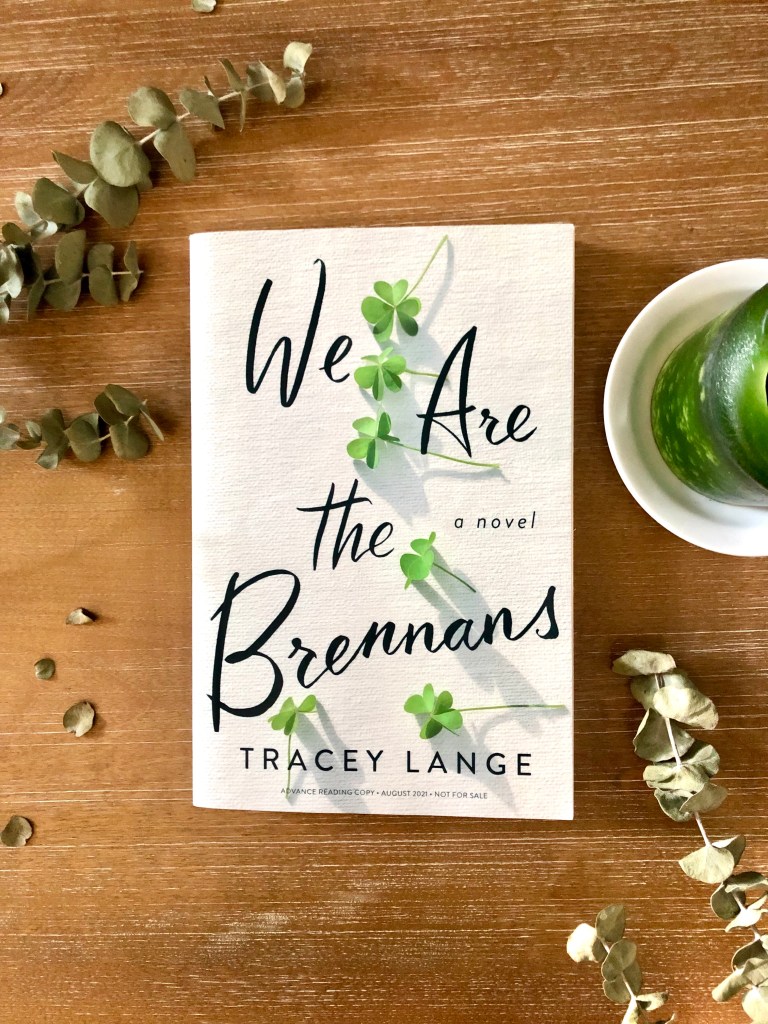
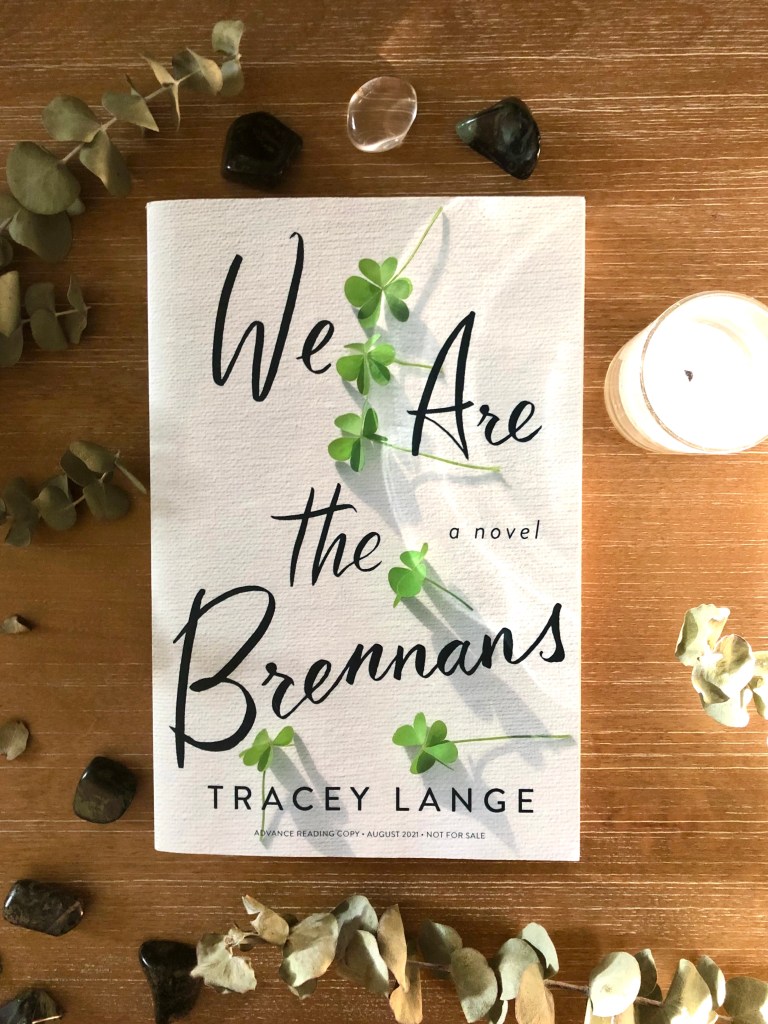
We Are The Brennans by Tracey Lange is the story of an Irish-American family trying to stay close and take care of one another despite what life throws their way. It reminded me of the late, beloved Maeve Binchy’s family dramas.
After an accident in LA, their sister, Sunday, returns to the family home in New York, where her father and brothers all live together. Coming home means Sunday has to rub shoulders with her ex-fiancé, who works with her brother Denny. Sunday slowly heals from her accident and begins to help out at the family pub.
As she sorts out her feelings for her ex, Kale, and works through what made her leave so suddenly five years earlier, dark family secrets begin to find the light of day.
Someone wants revenge on their family–someone who knows things that could ruin them. The Brennans will either face the painful truth and it will tear them apart or they will band together, stronger than ever.
If you like novels about families and the secrets they keep, you’ll enjoy reading We Are The Brennans.
*I received a free ARC of We Are The Brennans from Celadon Books in exchange for my honest review.
*This post contains Amazon affiliate links. If you click through and make a purchase, I will receive a small compensation at no extra cost to you. This helps keep my blog ad-free.
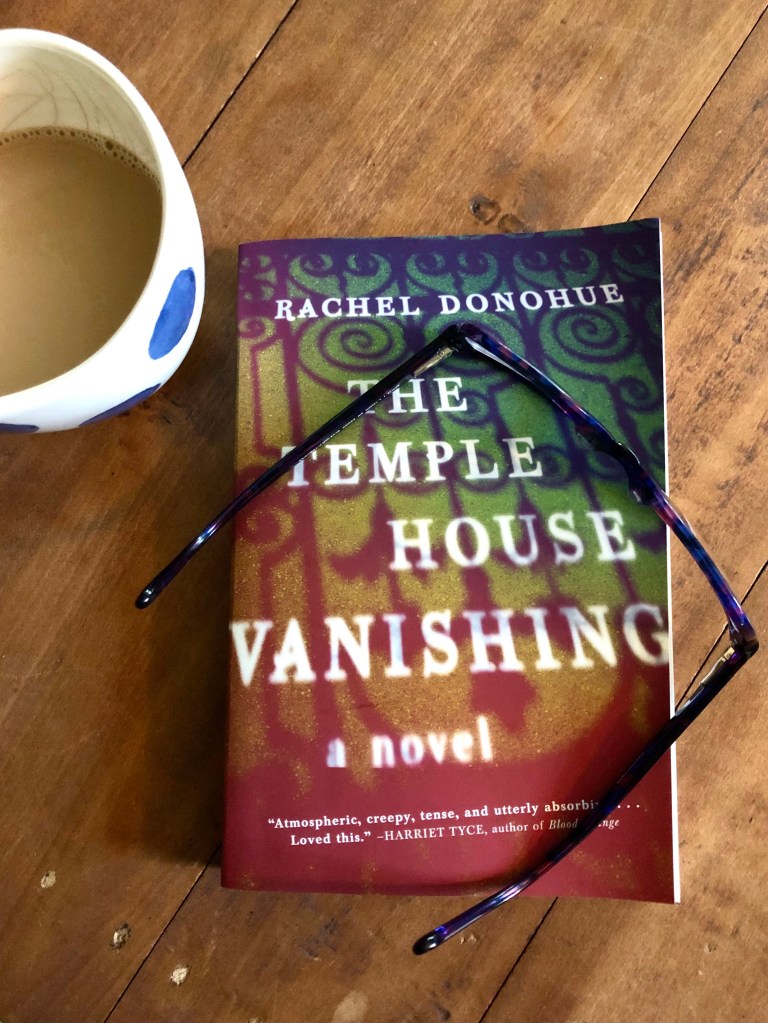
I first heard about The Temple House Vanishing by Rachel Donohue from a recent R.J. Julia newsletter in which she shared her bookstore staff’s favorite pics. It sounded like a book I’d like to read, so I ordered it right away. And it was satisfyingly what I was hoping for: dark, heavily atmospheric, reminding me of Rebecca by Daphne du Maurier, except this story is set in Ireland in the 1990s and is about the madness of adolescent obsession.
Lonely Louisa comes to Temple House, a private Catholic school run by nuns. She’s a scholarship student, so is ostracized and bullied by anyone who is anyone at the school. With her parents’ recent divorce, Louisa feels angry, conflicted, and lost, like she belongs nowhere.
She meets Victoria, a pretentious, sophisticated, seemingly confident girl who appears to have a special relationship with Mr. Lavelle, the gorgeous young art teacher. Intent on impressing Victoria and Mr. Lavelle, Louisa attempts to fit in, with her writing, her literary choices, and her conversation all tailored to please.
Jealousy among Mr. Lavelle’s favorites builds tension that leads to a public declaration of love by one student that sends the school into a spin. And shortly after, Mr. Lavelle and Louisa vanish into the mist one night never to be heard of again.
Twenty-five years later, a journalist who used to live on Louisa’s street decides to uncover the truth. Did Mr. Lavelle and Louisa really run away together? Is there more to the story that Victoria’s been keeping back all these years? The journalist begins digging and asking questions and finds a story darker and more disturbing than anyone imagined.
If you like dark, mysterious, atmospheric tales set by the seaside, you will enjoy The Temple House Vanishing.
This post contains Amazon affiliate links. If you click through and make a purchase, I will receive a small compensation at no extra cost to you. This helps keep my blog ad-free.
Have you read any of Elly Griffiths’ Ruth Galloway mysteries? They’re set in modern-day Norfolk, England, where Ruth is an archeologist who is often called out to help with DCI Nelson’s investigations.
In The Night Hawks, local metal detector enthusiasts find a body while they’re looking for treasure. It turns out to be a young man who lived nearby. And surprise–it’s murder! Bodies pile up as Nelson’s investigating progresses. Much seems to revolve around Black Dog Farm, a lonely, dark place with a horrific past. As Nelson gets closer to uncovering who the murderer is, he puts more people than himself in danger.
What I appreciated about this book in the series was the characters of police inspector Judy and her partner, Cathbad, who are also friends and neighbors of Ruth. They add interest and depth to the story, in the way that Louise Penny’s characters do. The ongoing conflicting elements of Ruth and Nelson’s relationship adds tension and I wonder how long they’ll let the current situation continue.
If you’re a British mystery fan, I recommend The Night Hawks as well all of the rest of the series.
I was given a free egalley of The Night Hawks in exchange for an honest review.
This post contains Amazon affiliate links. If you click through and make a purchase, I will receive a small compensation at no extra cost to you. This helps keep my blog ad-free.
Alex Michaelides’ new novel, The Maidens has all the right qualities of a good British mystery which made it hard to put down. The majority of this dark, atmospheric story takes place at the University of Cambridge and is woven around Greek mythology, so it feels a bit like the Inspector Morse or Inspector Lewis tv series.
The protagonist, Mariana, a group therapist, is trying to pick up the pieces of her life a year after her husband’s sudden death in Greece. Her late husband’s niece, Zoe, who Mariana raised as her own child, calls to tell her that a friend has just been found dead on campus.
Mariana goes to Cambridge to comfort Zoe and winds up getting involved in detecting. A creepy professor, a student she meets on the train, and an unhinged, obsessed client add to the uneasiness as Mariana believes she is being stalked. Cryptic postcards, a secret society, and more murders lead to what I thought was a sure ending…and then the rug is pulled out to reveal the startling truth! The twist left me dumbfounded and in definite awe of the author.
I highly recommend The Maidens to British mystery and psychological thriller fans–this is a must-read for your summer TBR stack.
I was given an ARC of The Maidens from Celadon Books in exchange for an honest review.
This post contains Amazon affiliate links. If you click through and make a purchase, I will receive a small compensation at no extra cost to you. This helps keep my blog ad-free.
Ruth Pavey’s new book, Deeper into the Wood, shares her love of the four acres of wooded land she has been nurturing for over two decades. It’s a personal tale of one woman’s faithful care for a patch of land that is rather ordinary to anyone except to her.
We follow her through the year as she travels between London, where she lives, and Somerset, where the wood is located. She spends time tirelessly planting, pruning, weeding, watering, and walking among the trees, shrubs and plants. And as she spends time in the wood, she observes the growth, the changes, what thrives and what doesn’t.
She also observes a rather alarming reduction in the diversity of animal, bird, and insect species, as well as a drop in overall numbers. She observes the changing climate. She invites experts in to count plant and moth species. She invites friends on walks with her. She invites family into the wood in hopes of interesting them in caretaking. She researches the history of the place. She is determined to do the best she can as caretaker of this land.
Deeper into the Wood was an inspiring read, and it encouraged me to care for my own land with greater devotion. If we all tended our land as well as the author did, Nature would benefit greatly.
I recommend this book to anyone interested in nature memoirs, natural history, or books about country life.
*I was given an e-galley of this book through Net Galley in exchange for my honest review.
Saint X is one of the very few books I’ve read this year that I could not put down! The bright, tropical cover disguises the depth of the subject matter. For although it is a clever, suspenseful thriller, this novel addresses the evolution of self, the parent-child relationship in its various stages, the advantages and guilt of white, wealthy people, and the disadvantages of poor people of color on Caribbean islands and the rest of the world.
It starts like a film, zooming in to the fictional Caribbean island of Saint X. It’s the mid-1990s. The reader is introduced to a well-to-do white family from New York vacationing at a luxurious resort for their New Year holiday.
Alison, the elder daughter, is eighteen, pretty, self-absorbed, bored, and typical of girls of that age. The unusual one and the heroine is the younger daughter, Claire, or Clairey, as the rest of the family affectionately calls her. She is seven years old, has an unusual appearance, is shy, socially awkward, and appears to display possible OCD tendencies. The parents remain on the periphery of the story, and what we know of them is seen through the eyes of Claire.
The other main character in the novel is Clive Richardson, a young man who was born and lives on Saint X, and who, along with his friend, Edwin, becomes a suspect in Alison’s death. In comparison to the comfortable lives led by Alison and Claire, Clive is without the advantages that wealth can provide. He grows up without many prospects for the future, so after high school, he and Edwin find employment serving the rich white people at the resort. Which is how they meet Alison and become involved with her on the night she goes missing.
As the novel unfolds, we glimpse some of what Alison gets up to and who she interacts with in the days and nights leading to her disappearance and death. After her body is discovered, Alison and Claire’s parents are frantic to find answers, to discover who is responsible for their daughter’s death. Although Clive and Edwin did spend some time with Alison on the night she disappears, not enough evidence is found to charge them with her supposed murder, so it goes unsolved.
The novel moves forward to when Claire is in her mid-twenties and living a fairly normal life in New York City complete with a good job and friends. She calls herself by her middle name–Emily–in an attempt to put the past behind her. Except she can’t. She still longs to learn more about Alison, and more about why and how she died.
We flash back in time to the months immediately following Alison’s death when Claire’s parents are wrapped up in their own grief and she feels forgotten. Then we see her as she grows up, through all the awkwardness of adolescence and into young adulthood, and how she must deal with the way people treat her when they discover who she is. And even though she wishes she could forget, Alison haunts her wherever she goes.
So Claire is in NYC, trying to live like other people do. As a way to assuage her guilt for her affluent background, she moves into an apartment in a part of Brooklyn that is mostly inhabited by economically disadvantaged people of color. She is still socially awkward, so she doesn’t interact much with the other tenants in her apartment building, but she wishes she could.
Then, out of the blue, while taking a taxi home one day, Claire looks in the rearview mirror and is shocked to find that her driver is Clive Richardson–the man that she has always believed was involved in Alison’s death! Everything she lived through as the sister of a murder victim comes flooding back in that instant. She becomes obsessed with getting Clive to confess. She relentlessly stalks him every night after work. She finds out everything she can about him. Then she pretends to befriend him.
What comes of this obsession with and connection to Clive? Will he eventually confess to his involvement in Alison’s murder? Will Claire ever be able to heal and let go of the past? Ah, but that would be telling! That is what you’ll find out when you read Saint X for yourself.
I was very fortunate to receive an Advanced Reading Copy of Saint X from Celadon Books; however, all opinions are entirely my own. Saint X, written by Alexis Schaitkin, will be published on February 18, 2020 and I absolutely recommend this novel to lovers of mysteries, crime thrillers, and really good fiction.
I recently finished reading The Moment of Lift by Melinda Gates. Before choosing it as an audiobook, I had no real idea what it was about; I wanted to be able to join the bookish community in conversation about it.
Sometimes it’s a good thing to have zero expectations about a book. In this case, I was completely unprepared for the powerful, positive message that this book contains. Melinda alternated between writing about research and sharing stories of women around the world.
My eyes were opened to the gender bias and inequality that persists in the U.S. even in 2019. In first-world countries like the U.S., it has taken women millennia to get where we are today and we still have a way to go. Women in developing nations suffer much more extreme gender bias and inequality every day of their lives.
But this book is filled with stories of women who changed their circumstances by challenging those in authority and standing up for themselves and their children.
Melinda is clearly a woman in a position of wealth, privilege, and power, but she also possesses humility, a willingness to learn and change, and an awareness of the dangers associated with wealthy people trying to do good. I was surprised by her down-to-earth manner. I think listening to her narrate her own book made it much more personal. And she is a really good narrator; I am super picky about voices, but hers is just right for listening.
As a person of faith (she is Catholic), Melinda takes into account the Bible’s words about serving the poor and being a voice for those who cannot speak up for themselves. She travels the world and spends time with the poorest, most marginalized people, which I was impressed by, and which is certainly Christ-like. But as much as her and Bill’s charitable foundation impacts the lives of others, she has been impacted and changed by them as well.
In case you were wondering, this isn’t a book that puts down men in any way, or that preaches that women should be above men. The book has a respectful tone toward everyone: man, woman, child, rich, and poor. Instead this book is about women taking their places alongside men in every area of life. And the message woven throughout the book is about love as the missing link, as the needed element that can heal social ills.
The Moment of Lift will challenge you, educate you, surprise you, break your heart for the suffering of others, and, yes, it will lift your spirit! I hope you put it on your TBR list and read this important book very soon. I’d love to hear what you think when you read it!
I’ve heard nothing but high praise for The Huntress by Kate Quinn. Since I didn’t read The Alice Network, I thought I’d see what all the fuss was about. I placed a hold at the library and as soon as I finished City of Girls (loved it!), I opened it up. Post-WW2, the Nuremberg Trials, two men on the trail of Nazi criminals, a woman fleeing from justice…It could be good, I thought. But six or seven chapters in, I still wasn’t feeling it, so I quit.
What I liked about The Huntress: the writing was solid and the story didn’t stagnate. From one chapter to the next, readers are introduced to the various main characters in turn, each round building on their backstories and moving the plot forward. There was danger, romance, and suspense: all the important elements in a novel.
What I didn’t like: Overall, none of the characters (except Nina) intrigued me or made me want to invest in the story. Also, the huntress is revealed right away, so there’s no mystery as to who she is. I guess the suspense is how she is going to be caught, but that took away a lot of excitement for me.
Also, this is dumb, but one of the characters is a young American woman named Jordan. The novel begins in 1946. Tell me who in white-bread America named their baby girl Jordan in 1928, which would’ve been the year she was born? I have a believability radar for films and novels and this was just off the charts unbelievable and silly. People were naming their girls Doris, Ruth, Mildred, and Betty in 1928–not Jordan.
I also didn’t care for the two men who are tracking down the huntress. Nothing particularly wrong with them, they just seemed run-of-the-mill stock military guys with no real personalities.
I may not have given this book enough time, it’s possible. If you liked it, please don’t be offended! We don’t all like the same things and that’s what makes reading and the reading community so much fun. I learn about books I’d never have dreamt of picking because other readers recommend them.
My reading philosophy is that life is short and there are too many books I want to read, so I better make sure they are books I actually want to read. Because my TBR is always growing, and I don’t read for a living (yet, anyway!), I want to read books that either captivate my attention with the characters or the plot. Recently I listened to the podcast episode of Getting Bookish With Shawna and Lizz where they talk about their DNF (Did Not Finish) books. You might enjoy this episode!
Are you a reader who has to finish whatever she starts? Or do you regularly say no to books that just aren’t for you? I find that the more I read, the more I discard. At least half, if not more, of the books I bring home from the library get sent back with only the first few chapters read.
I’d love to hear what you thought of The Huntress. If you read it, please comment below or tell me about whatever else you’ve picked up or discarded lately.
Like many other Liz Gilbert readers, I couldn’t wait for the release of the novel City of Girls. Whenever Liz mentioned City of Girls on Instagram, she said it was going to be lighthearted and fun; she said it was going to involve theatre and showgirls; she said it would involve plenty of sex.
City of Girls has all of those elements and much more. The novel is written from the perspective of Vivian, a woman in her nineties, who looks back over her life from age nineteen and on. She writes about arriving in New York City in 1940 and experiencing a very different kind of life from the one she had previously known: sheltered, stuffy, unimaginative. She gets to know all sorts of colorful characters and lives wild and carefree for a time.
As the story unfolds, she makes and loses friends, survives scandal, lives through WW2, fashions a successful and creative career for herself, and, as she lives all these experiences, she learns to know who she is.
I loved the descriptions of old theaters and night clubs, the fashion of the various decades in which Vivian lives, the energy of New York City and how it changed over the years. Overall, the tone is positive, light, and joyful. But, if you’re worried, as I was, that the book is just fluff, think again. There is substance here. There are passages that I will read and reread. Oprah read one during her interview with Liz Gilbert on Super Soul Sunday. And here is words of wisdom from Vivian’s aunt, Peg, that resonated with me: (on page 327)
“You must learn in life to take things more lightly, my dear. The world is always changing. Learn how to allow for it. Someone makes a promise, and then they break it. A play gets good notices, and then it folds. A marriage looks strong, and then they divorce. For a while there’s no war, and then there’s another war. If you get too upset about it all, you become a stupid, unhappy person—and where’s the good in that?”
So, am I going to recommend this novel? Yes! If you’re a reader of fiction, add this to your TBR. Buy a copy or place a hold at your library, but definitely read it. Particularly, I think it’s an important read for women because it’s a story of strong women who lived unusual, successful, and satisfying lives.
And when you read it, comment here, send me an email or DM me on Instagram and let me know what you think!
Nearly every day I read articles about mental illness, burnout, and the stress of modern life. And do you know what almost always makes the list of ways to relieve or remedy the symptoms? Time spent in Nature! Time spent out-of-doors, away from screens surrounded by sky and trees, near bodies of water, in the company of birds and other wildlife will do much to calm the mind, relieve tension and stress, and leave one with an overall sense of wellbeing.
In Bird Therapy, Joe Harkness shares his personal story of living with OCD, generalized anxiety disorder, and depression, and how he manages it with hours outside birdwatching. Let me just say that even though the book begins with his mental state in a dark and dangerous place, the book doesn’t stay there and doesn’t focus on his illness. It’s a positive read about how much his life has changed for the better because of what he calls “Bird Therapy”.
If you’re like I was before reading this book, you might tend to think birdwatching is for retired, elderly people or just for super nerdy types. But the author became a birdwatcher as a young man, so the book is written with a youthful voice full of energy and enthusiasm.
In each chapter, he shares a different glimpse of his birdwatching journey, from his very first attempts to connect with other birders, to setting up his first bird feeders in his back garden, to finding a patch to call his own. He describes experiences of rare bird sightings, interactions with other birders, regular visits to his patch, and what it is like to birdwatch in different seasons. At the end of each chapter, he shares a list of helpful tips for people who would like to begin the birdwatching adventure.
An interesting and positive aspect of this book is that it’s published by Unbound, a crowd-funded indie publisher.
If you or someone you know struggles with mental illness, you would benefit from reading this book. Also, if you’re curious about birdwatching, especially about how to get started, read this book. After reading Bird Therapy, I am paying closer attention to the birds all around me, and am spending more time outside every day. Published on June 13, this book is recommended reading! One last note: you might want to check out Joe’s blog, also named Bird Therapy, about his birdwatching experiences.
I received a free e-copy of this book from Net Galley, but all opinions are completely my own.




 Life of Kim