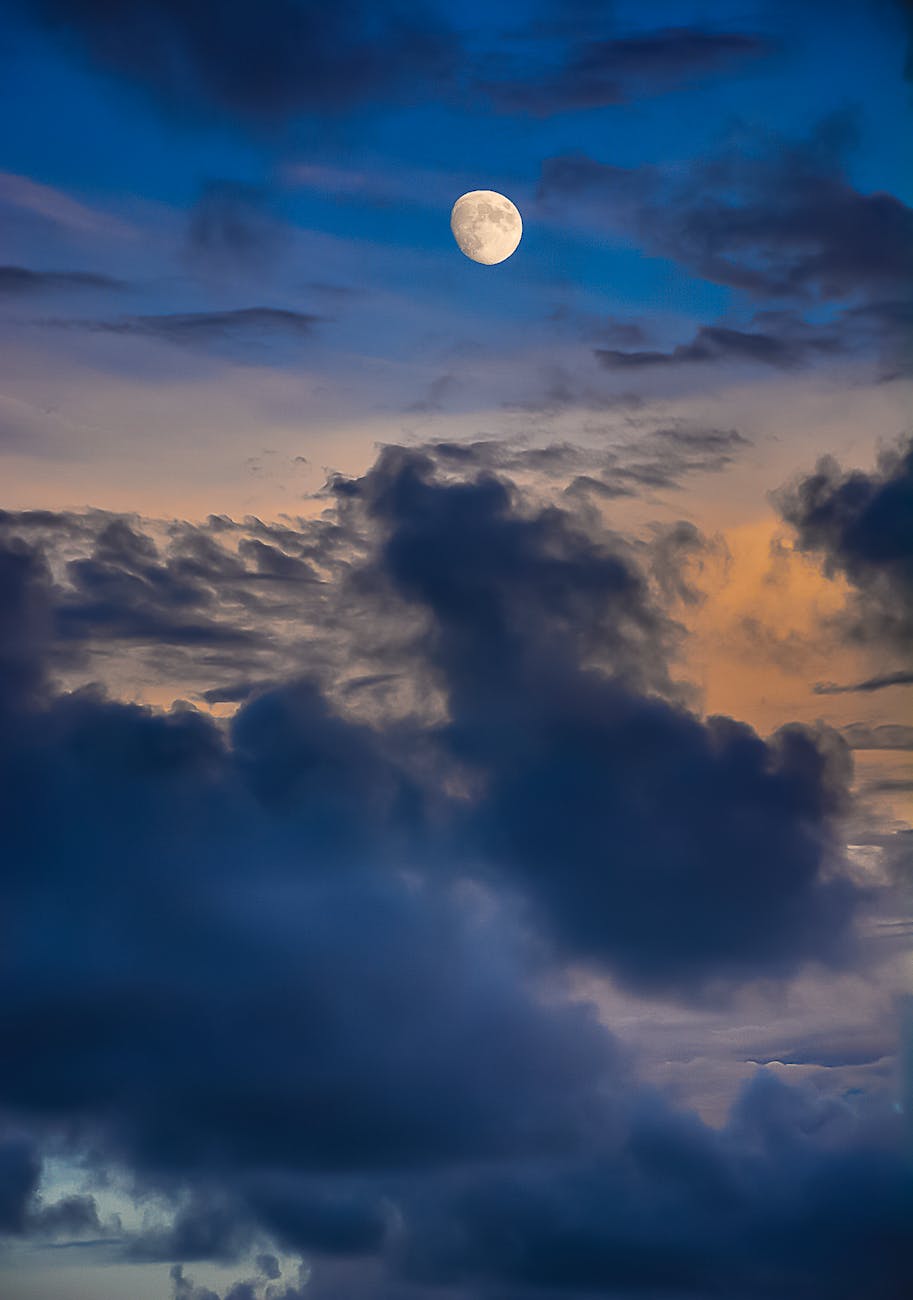
Photo by Reynaldo #brigworkz Brigantty on Pexels.com
Moon Tonightby Gwendolyn Bennet
Moon tonight,
Beloved . . .
When twilight
Has gathered together
The ends
Of her soft robe
And the last bird-call
Has died.
Moon tonight—
Cool as a forgotten dream,
Dearer than lost twilights
Among trees where birds sing
No more.
Find this poem on Poets.org.
This post contains Amazon affiliate links. If you click through and make a purchase, I will receive a small compensation at no extra cost to you. This helps keep my blog ad-free.
Earlier this year I seemed to be running into the theme of edges and margins over and over. People who live on the edges of society. People who live in the margins on purpose to have the life they want. And what plants grow on the edges of fields, gardens, at the side of the road.
At the edge of something a transition can happen. When you get to the edge of your cultivated garden or even a farm field, what we like to call “weeds” grow in these neglected, undernourished places. Cultivation by humans ends here and the wild begins. Nature restores the land as wild by bringing in seeds that grow into plants that improve the soil and hold it in place, and feed native insect and animal species.
People who are part of a community, but feel mostly like they don’t quite fit, are at the edges. They’re the observers of the culture, the ones who see what’s coming, what’s about to change. The loneres, the seers, the oracles, the forerunners, or the Enneagram 4’s, of which I am one.
Earlier this year, watched a documentary about a family who does their best to live by the principles of permaculture (earth care, people care, fair share) and they do the least amount of work in exchange for money/outside jobs so that they can spend more of their time with each other. They gave up a lot of modern conveniences so they can live simply, which means doing a lot of work by hand just to survive. This is important to them, so they’re in the world, but just barely. They’re at the edges. They live a rather uncomfortable life for modern-day humans to stand by their ideals.
When you get to the end of a visit with family, there is that edge that blurs a bit (maybe with tears) as you say goodbye to your loved ones and drive away or watch them do so. I always find it takes me at least a day to acclimate to my usual life and adjust to them not being there, or to my having returned home. There is an edge when I leave them and a transition as I get back into my normal routine. I feel sad, like pieces of myself have gone with them. I’m unsure, out of sorts, and have to work my way through time until I feel more settled in myself.
Edges are uncomfortable and something I would probably avoid if I could. It would be less painful to seamlessly go from one experience to another without that transition, that in-between time. That bump in the road that marks before and after, then and now, this experience and that experience. Is comfort always in our best interest, though? It hurts to grow. It is unsettling to change, to be in-between. Yet we need challenges to change and mature.
I am living in the edges of my spiritual life. I was a charismatic Christian for the first 39 years of my life, albeit a questioning and a bit rebellious one. And then I found I couldn’t accept everything that was taught at face value anymore. I had to leave church. I didn’t fit the mold in many different ways and so I stepped into the wild. It’s been seven and a half years and I’m still in the edges. In the wild places. As I’ve read, pondered, thought, learned about and discussed spirituality from many sources, I’m less certain of some things and more sure of others. For instance, I no longer believe the Divine is exclusive to the Jews and Christians. How could I have even thought that? I used to struggle with those big questions such as:
Until Jesus came and died on the cross so people had a chance to accept salvation, where did those people go when they died?
And before Christ’s time, was it only the Jewish people who could be saved through their constant sacrifices and obeying rules and all the other nations out there went straight to hell because they weren’t Jewish?
And why are Christian people afraid of “Eastern religions”? Where do they think Christianity came from? I mean, I realize it’s been Westernized and even worse, Americanized, but do they really think Jesus was a white man who preached a lot of the stuff one hears in conservative circles today? About property and gun rights and hating certain groups of people because they’re different than us?
I could no longer go along with the idea that because the Bible was written in a time when women were not even considered people, we are still going to follow what is written about women today.
In spite of the fact I’ve parted ways with the church, I still find beauty in some aspects of Christianity. In some of the poetry and prophecies in the Bible; the classical sacred music; some of the liturgy, but that’s where it ends. I am tired of listening to men write books and blog posts about what they think God meant when he said this or that. I am tired of people being afraid of anything that doesn’t have a “Jesus Saves”, “God Bless You”, or “Hallelujah” stamped on it. Of people meeting raw grief, depression, questioning, etc., with a pat verse or cliche instead of sitting with them and holding their hand in their dark night of the soul.
What I am edging into is Celtic spirituality, nature-based, wild, and in the margins. I am searching for more of the sacred feminine in my spiritual experience. I am craving connection with a community yet don’t know if I can deal with the compromises involved in belonging to one. Rachel Held Evans, in her book, Searching for Sunday, admonished readers not to wait for the perfect church or spiritual community because it doesn’t exist. And I know she’s right. I’m just not willing at this point to belong to something that I can’t commit to 100% and that feels completely congruent with the deep, inner places of my heart.
Maybe it’s because I’m still living in the wild places; at the edges and margins of spirituality. I’ve changed so much in the past seven and a half years and will continue to. If you’re living in the margins, in any sense, but especially with your spiritual life, all you can do is keep your heart open; keep seeking, keep listening and asking. God/Goddess/the Divine hasn’t changed. Love hasn’t stopped singing over us and drawing us into an embrace. You are just as loved and just as watched over as those who feel solid in their spirituality. We are all loved, and still precious, still valued, even if we are living in the wild places, at the edges.


 Life of Kim