
Fiction to Read or Consider

This post contains Amazon affiliate links. If you click through and make a purchase, I will receive a small commission at no extra cost to you. This helps keep my blog ad-free.

Family Family by Laurie Frankel had such an unusual feel to me. Themes include teen pregnancy, adoption, and childhood trauma, but it isn’t sad or even serious. Everything almost feels like a joke.

Her main character, India Allwood, is bright, determined, creative, and goes after what she wants. She makes mistakes but makes the best of tough situations too. All the characters seemed weird, too quirky, and bit unreal. The lighthearted feel the characters and the writing had seemed too bright, too glossy, too fake like Hollywood where India lives with her adopted kids. I like that India won’t paint herself as a victim, but she also doesn’t seem to think her poor choices are worth learning from. I found her habit of ripping up pieces of paper and throwing them all over like confetti whenever (and wherever) she celebrated really irritating.

At the end some things come to the surface and are dealt with, but everything wraps up a bit too perfectly. It’s almost as if the book was written from a kid’s perspective, except it wasn’t. If you read it, I’d love to know what you think.

North Woods by Daniel Mason felt like a collection of short stories all centered around one place, instead of a novel. But I don’t like short story collections and I loved this book. It had an element of magic realism with ghosts and also a strong sense of the swiftness of time passing, and of the never-ending cycles of life, death, and rebirth.

There was a deep reverence of wild nature embedded into the novel. When I finished reading it I wanted to bow and kiss the earth and embrace the trees nearby. The author also imbued an interest in human history, starting from Puritan times and going into the future. I found it so creative and refreshing to have story after story of humans interacting with the land, the trees, wildlife, and the house as the years went on. Most were written in story form, sometimes as a letter, article, or poem. Certain characters I cared about more than others, but I never was bored. North Woods is a sweeping, unforgettable novel that is unlike anything I’ve ever read. Highly recommended!!

One of the Good Guys by Araminta Hall is a mystery/thriller that has a few surprises up its sleeve. I knew that all must not be what it seemed as it starts out with Cole’s POV because this novel is a commentary on the #MeToo movement. Cole obviously thinks he’s “one of the good guys” and just seems too good to be true but he’s the only viewpoint for more than half of the book. So something felt off but I just didn’t know what exactly.

And then, as Leonora takes over telling the tale, the reader begins to be clued in to what is really happening. And that there is a clever, daring, carefully-laid trap for one unsuspecting person. It didn’t have the same feel as a typical murder mystery because of the point the book is trying to make is so loud and clear. It takes over any mysterious elements. It definitely held my interest and had some creepy/scary elements. I liked the switching POVs in the second half as it gave a clearer picture of what was going on. Trigger warnings include IVF treatment and violence toward women. Oh and I forgot to mention the book is set on the English coast with dangerous cliffs and mist and cozy cottages and the stormy sea. If any of these elements or the novel’s theme interest you, I think you’ll enjoy reading One of the Good Guys.
Lent Begins Again

This post contains Amazon affiliate links. If you click through and make a purchase, I will receive a small commission at no extra cost to you. This helps keep my blog ad-free.

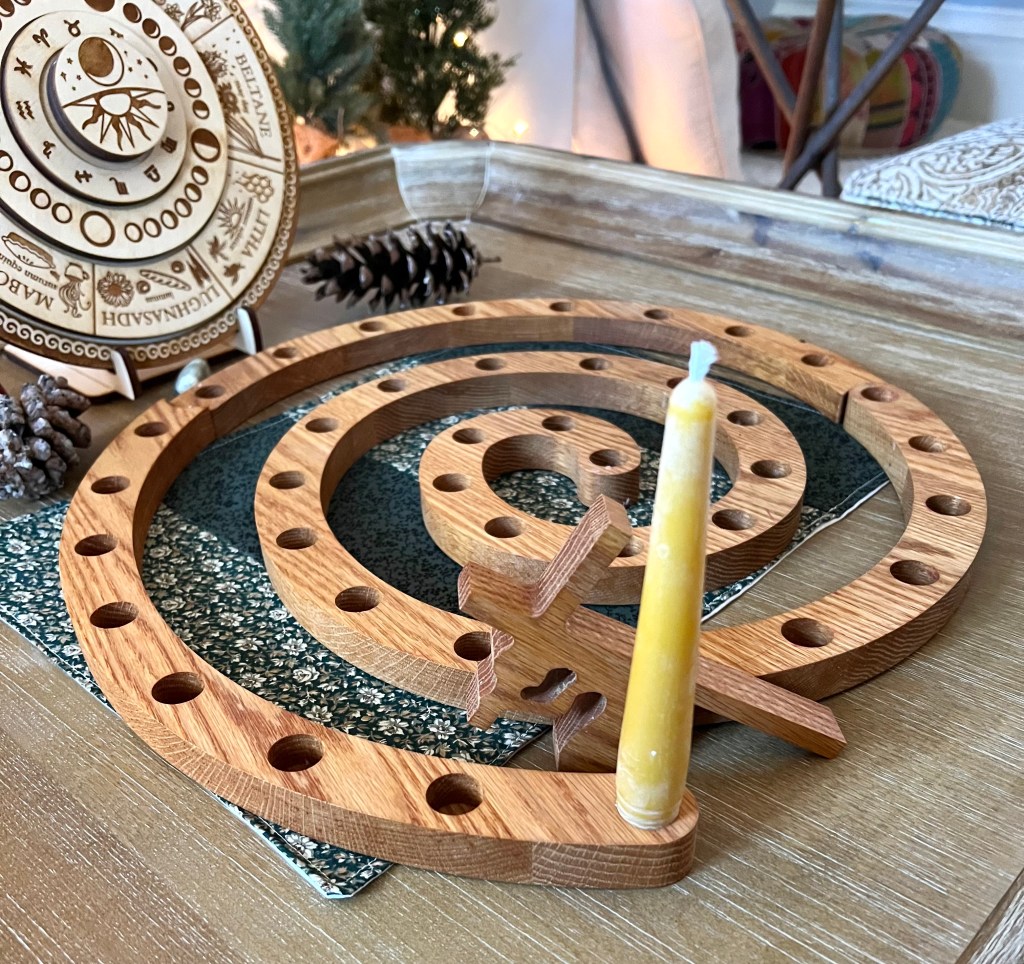
This morning I set out my Lenten spiral and spent a few hours decluttering and cleaning as I make room in my heart and living space for what Lent holds for me this year. I know what the traditional three aspects of Lent are: prayer, fasting, and almsgiving. And I also know the tendency of humans to turn Lent into a rules-based, rather than a heart-centered practice. It’s so easy to think, “I’m doing it better” or “She’s doing it wrong” and miss the point entirely.

In the past, I’ve done the giving up of sweets or wine or chocolate. And I’ve fasted from gossip or critical talk about myself or others. This year I am practicing laying down my burdens. I have some things I’ve been carrying for several years, looking backward with regret and anguish over my perceived wrongdoings and mistakes. As if I could go back in time or make anything right that way. Our minds know we can’t but feelings can take a lot longer. Grief takes as long as it takes.

But as I wrote about on Substack yesterday, I finally feel ready. I am letting all of that go. I’m laying it down as Lent starts. I know burdens are not so easily gotten rid of when we’ve carried them for so long. So I will have to practice this letting go. Again and again. Fasting from these burdens of shame, guilt, regret, punishing myself, etc.

Last night I finished reading Yung Pueblo’s book Inward. Serendipity surprises me with its stunning ability to appear at just the right time. I started Inward last year and then all these months later right where I picked it up was right where I needed to read. From the first page I started reading he mentions releasing burdens, loving oneself, liberation, healing, etc.

Page 111 says:

letting go is medicine
that heals the heart

letting go is a habit
that requires practice

letting go is best done
through feeling, not thinking


Page 186 says:


she's an explorer,
unafraid to travel
within her heart and mind,
ready to discover new places
to heal--releasing burdens
and planting wisdom wherever
her awareness takes her.


Page 197:
The forces 
of the universe
support those
who work at
healing themselves


And page 210:
as our ability to
know and heal ourselves
deepens, we will be better
equipped to examine the
world more carefully
and heal it more
effectively

So back to Lent. I will be practicing this laying down of burdens this Lenten season. As I usually choose a book to read for Lent, this year I am reading Christine Valters Paintners’ A Different Kind of Fast: Feeding Our True Hungers During Lent. The chapters all seem to resonate with what I’m hungering for and will support my ongoing spiritual deconstruction.

She wrote each chapter as an invitation: Ash Wednesday Week starts with Fast from Consuming and Embrace Simplicity; Week 1 is Fast from Multitasking and Inattention and Embrace Full Presence to the Moment; Week 2 is Fast from Scarcity Anxiety and Embrace Radical Trust in Abundance; Week 3 is Fast from Speed and Rushing and Embrace Slowness and Pausing; Week 4 is Fast from Holding it All Together and Embrace Tenderness and Vulnerability; Week 5 is Fast from Planning and Deadlines and Embrace Unfolding and Ripening; and the last week is Fast from Certainty and Embrace Mystery and Waiting.

So this is what I’m purposing and what I’m reading for Lent. If you’re an observer of Lent, perhaps you’d like to join me in reading through Paintners’ book A Different Kind of Fast: Feeding Our True Hungers During Lent. I’m opening up a private chat for paid subscribers of my Substack, Old Soul Stories, to share thoughts, questions, experiences of reading this book during the Lenten season. I’d love to connect with you there. You can subscribe here.

If you observe Lent, what are your thoughts or plans for this season?

Photo by Ejov Igor on Pexels.com